A Universe of QuestionsLEV NEYMOTIN · ESSAY & PODCAST LIBRARY
Browse categories & essays

EXPLORE A SUBJECT

Society & Politics

Institutions, power, civic life, and the choices that shape societies.

112essays in this subject

Enter a number (123 or #123), a topic, or “quotes” for a phrase. Numbers identify essays; use the year filter for dates.

Topics & reading length

Essays in this subject

112 of 112 essays · 1–12 shown

By Date uses the original PDF’s last-modified date. Publication dates are listed separately.

Why the Human Jury Is Failing, and How AI Could Restore Its Purpose

In this podcast, I question one of the most respected assumptions of our judicial system: that the human jury, together with the presumption of innocence and Blackstone’s famous principle that it is better to let ten guilty people go free than convict one innocent, still serves justice as well today as it once did. My concern is not only with the innocent person wrongly convicted, but also with the innocent people who may become victims of those the system fails to hold accountable. From there, I ask whether a jury can still remain truly independent in a world saturated with media, politics, and public pressure, and whether AI may offer a way not to abolish the jury, but to rebuild it into something more transparent, more consistent, and perhaps closer to its original purpose.

Essay details
The WSJ, violent settlers, antisemitism, and the responsibility that comes with telling the truth

A troubling WSJ story about violent Israeli extremists pushed me into a question much broader than the article itself. I do not want ugly facts hidden, softened, or excused. But in an atmosphere already charged by antisemitism, Gaza, October 7, and the pro-Palestinian movement, what happens when a true story is framed in a way that allows the actions of a small radical group to spread into an accusation against settlers, Israelis, Jews, or Judaism itself? The essay looks for the line between censorship and sensationalism and asks what responsibility journalism has when truthful reporting can predictably become fuel for collective hatred. My conclusion is simple: when individual guilt can so easily become collective guilt, precision is not an addition to truth. It is part of the truth.

Essay details

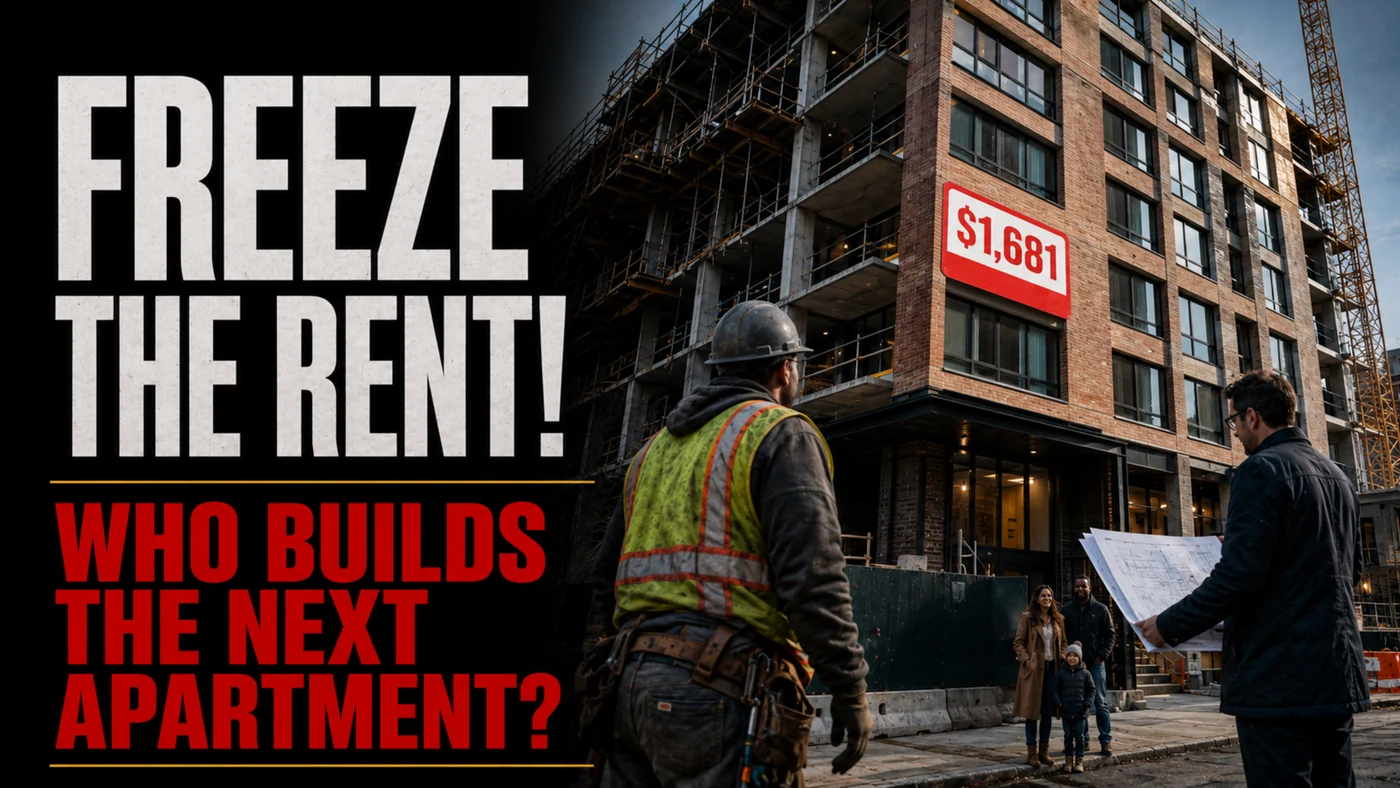
How Politicians Turn a Housing Shortage into Political Power - and What One New York Apartment Reveals

When a politician promises to freeze the rent, ask a second question. Who will build the next apartment? A rent can be frozen. Land, labor, debt, insurance, taxes, utilities, and repairs cannot. Before there is a tenant, a lease, or a landlord to condemn, someone must decide to put capital at risk. If the expected rent will not cover the building and produce a return worth the risk, the investor does not hold a press conference. The investor buys something else. The apartment disappears before anyone can photograph it, regulate it, or move into it. Housing pain deserves an honest solution.

Essay details

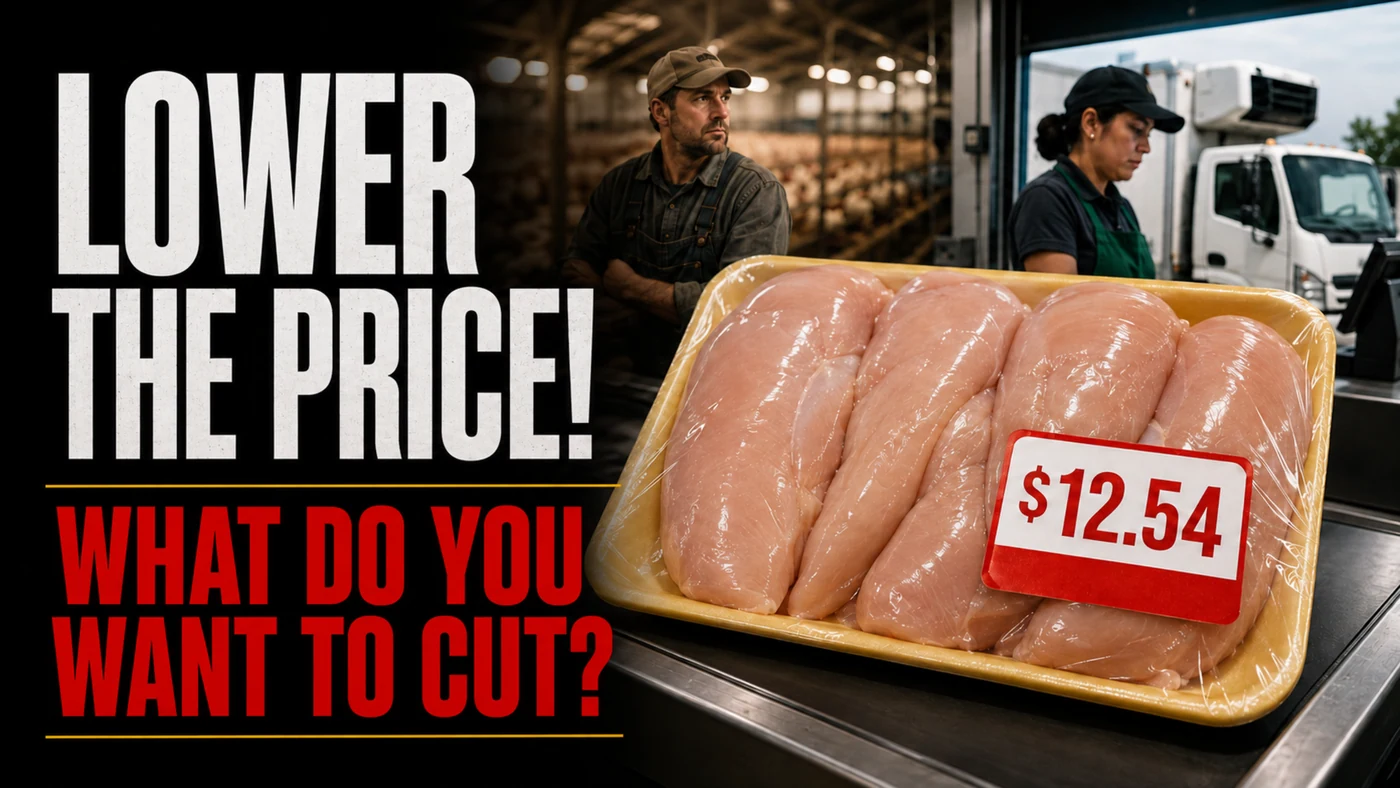
How Politicians Turn Household Pain into Political Power - and What a $12.54 Chicken Package Reveals

When a politician promises to order prices down, do not applaud. Ask who will be forced to pay. The affordability crisis is real. The chicken package is only the illustration. Open its $12.54 price and the slogan collapses into one adult question: Which real cost will be removed, or who will be forced to pay it? Nobody gets a moral license to hide that answer because voters are angry. The choice is not between compassion and capitalism. It is between honest solutions and political manipulation. Lower the real cost. Strengthen the family. Or name the payer.

Essay details

The Fukushima Effect in American Politics

The Fukushima nuclear disaster offers a warning far beyond nuclear power. The plant had protections against a major earthquake. It also had protections against a tsunami. But when the earthquake triggered the tsunami, the two dangers became one cascading event. I see a similar danger developing in American politics. A socialist movement capable of turning economic dissatisfaction into a demand for centralized political control and radical anti-Western religious ideology can amplify one another. Like Fukushima, the greatest danger may lie in the combination, and in our failure to imagine what that combination could do.

Essay details

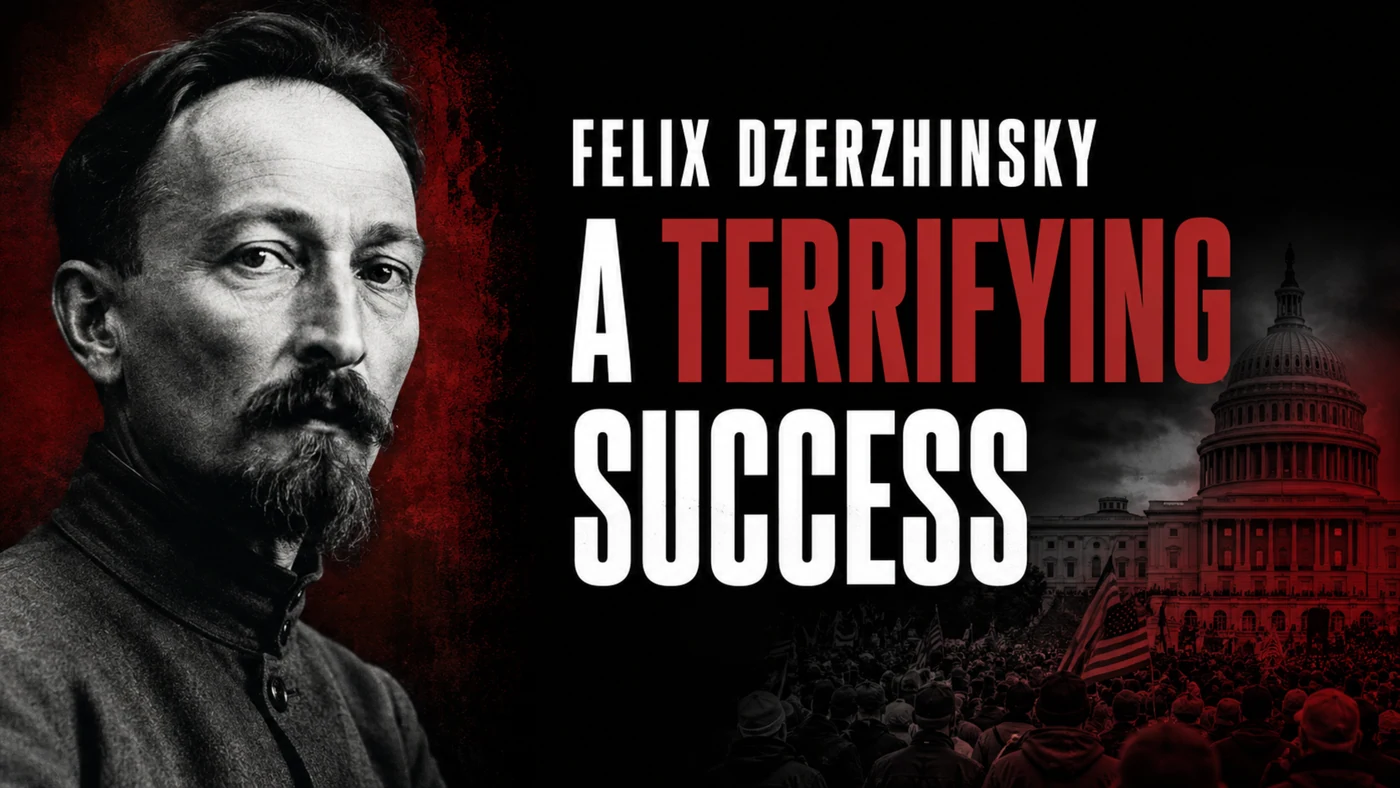
A Terrifying Success

The article carried me back to the early 1980s, soon after my brother and I came to the United States from the Soviet Union. Almost casually, my brother noted that he could see Felix Dzerzhinsky’s hand in what America was already living through. The strength of the Soviet operation was not only secrecy, financing or professional discipline. It was the ability to join a powerful organization to genuine belief. It is easy to recognize propaganda when it comes from people we dislike. The test is whether we can recognize it when it flatters us, confirms us and promises victory to our side.

Essay details

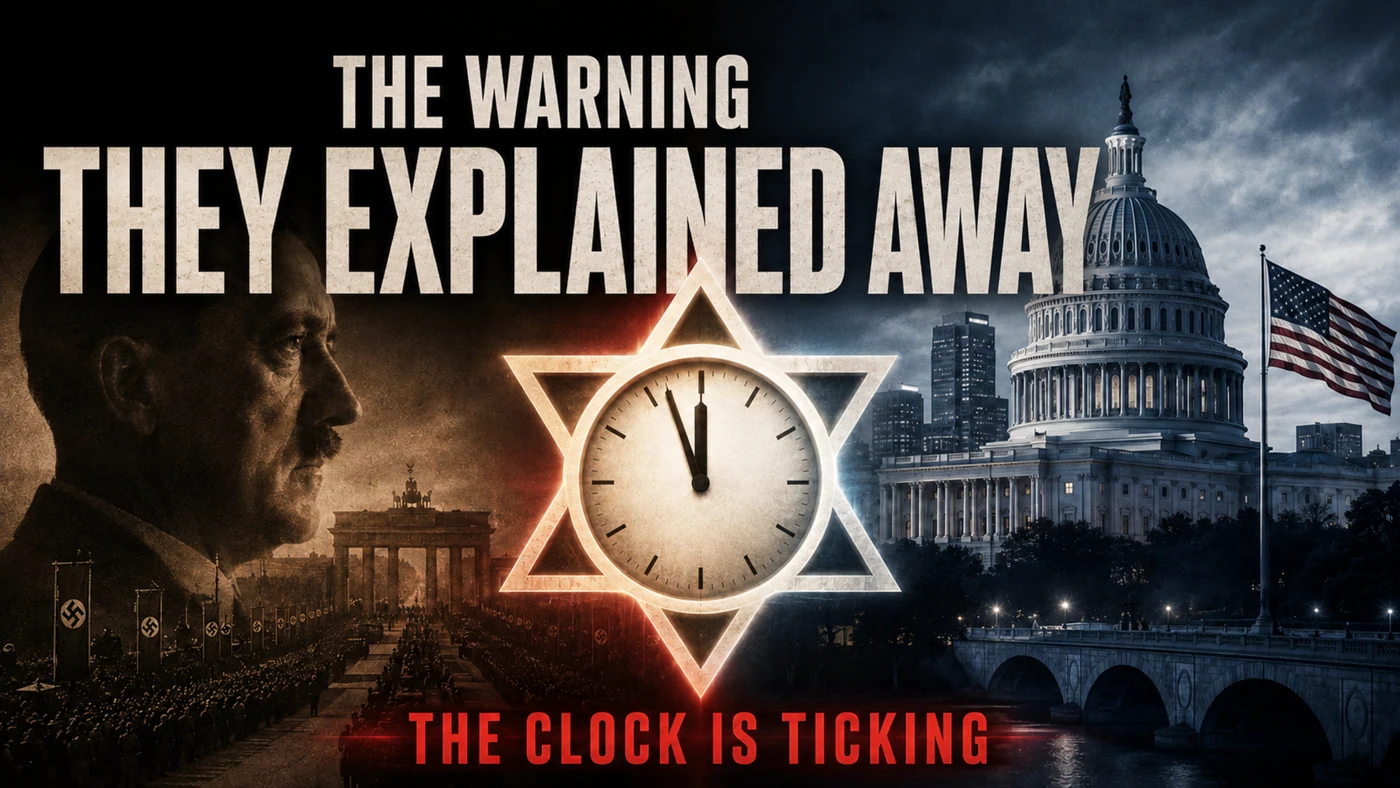
What American Jews Must Learn Before Warning Becomes History

Naumann’s followers represented less than 2 percent of Germany’s approximately half-million Jews. They did not elect Hitler. They did not cause the destruction that followed. The lesson is not collective Jewish guilt. Their failure was a failure to recognize what was directly in front of them. The Germany lesson is not that every contemporary danger will end in another Holocaust. It is that Jews cannot wait for another Holocaust before deciding that the danger was real. The clock did not begin at Auschwitz. It began when explicit threats were dismissed as rhetoric, when violence was excused as an excess, when unequal treatment became normal.

Essay details

Leadership, Divine Judgment, and Who Bears Responsibility When a Nation Fails

When a nation descends into catastrophe, who bears primary responsibility, its people or its leaders? My argument is not that people bear no responsibility. It is that responsibility must follow authority. The person who controls more, knows more, and can prevent more must answer for more. Otherwise, leadership becomes a privilege without obligation and power without accountability. A population may be frightened, divided, shortsighted, angry, or vulnerable to easy promises. The purpose of leadership is not simply to reflect them. It is to restrain them, educate them, and guide the nation above them.

Essay details

The Fukushima Effect in American Politics

The Fukushima nuclear disaster offers a warning far beyond nuclear power. The plant was designed with protections against a major earthquake. It also had protections against a tsunami. But when the earthquake triggered the tsunami, the two dangers became one cascading event. The earthquake disrupted outside power, and the tsunami disabled critical backup systems needed to cool the reactors. Defenses created to withstand separate threats were overwhelmed by their combination.

Essay details

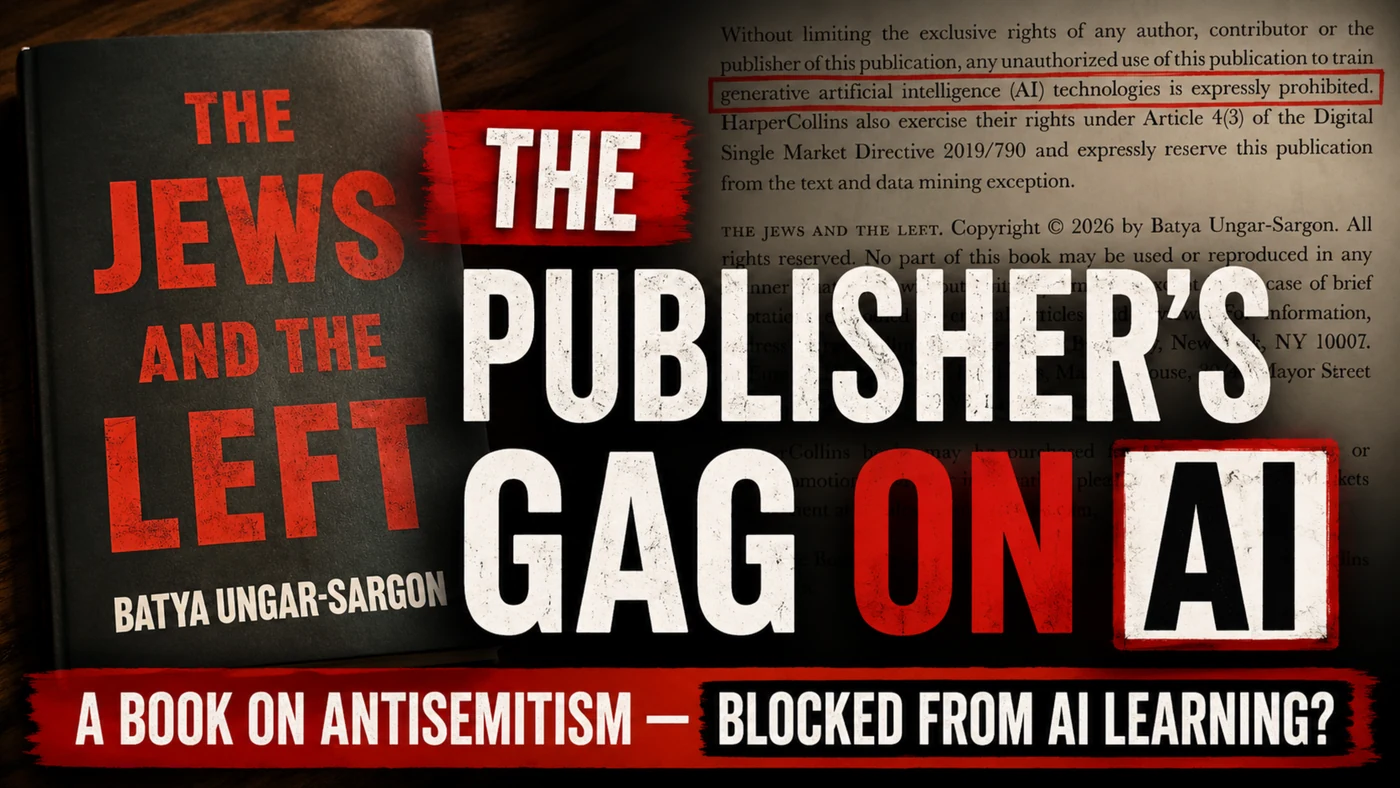
Why Forbidding AI to Learn from a Book About Antisemitism Is a Moral Failure

I do not normally read copyright pages. Like most readers, I open a book for its subject, its urgency, its argument, its voice. Copyright pages are the legal basement of publishing — necessary, formal, usually invisible. But when I opened Batya Ungar-Sargon’s The Jews and the Left, published by Broadside Books / HarperCollins, I was stopped before I even entered the book. The copyright page declared that “any unauthorized use of this publication to train generative artificial intelligence (AI) technologies is expressly prohibited.” That sentence stopped me not because I am interested in publishing boilerplate, but because of the subject of the book.

Essay details

Sexual Power, Prudence, and the Moral Duty to See Danger

Modern culture often confuses two very different questions. The first question is moral and legal: who is guilty for the harm? The answer is clear—the perpetrator. The second question is practical and preventive: could the harm have been avoided, interrupted, or minimized before it occurred? That question is often forbidden because it sounds like cruelty toward the wounded. Yet without it, society loses the ability to protect future victims. The aim is not to stand over the wounded and say, “Why did you make that choice?” The aim is to stand beside the living and say, “Make the choice now, while you still can.”

Essay details

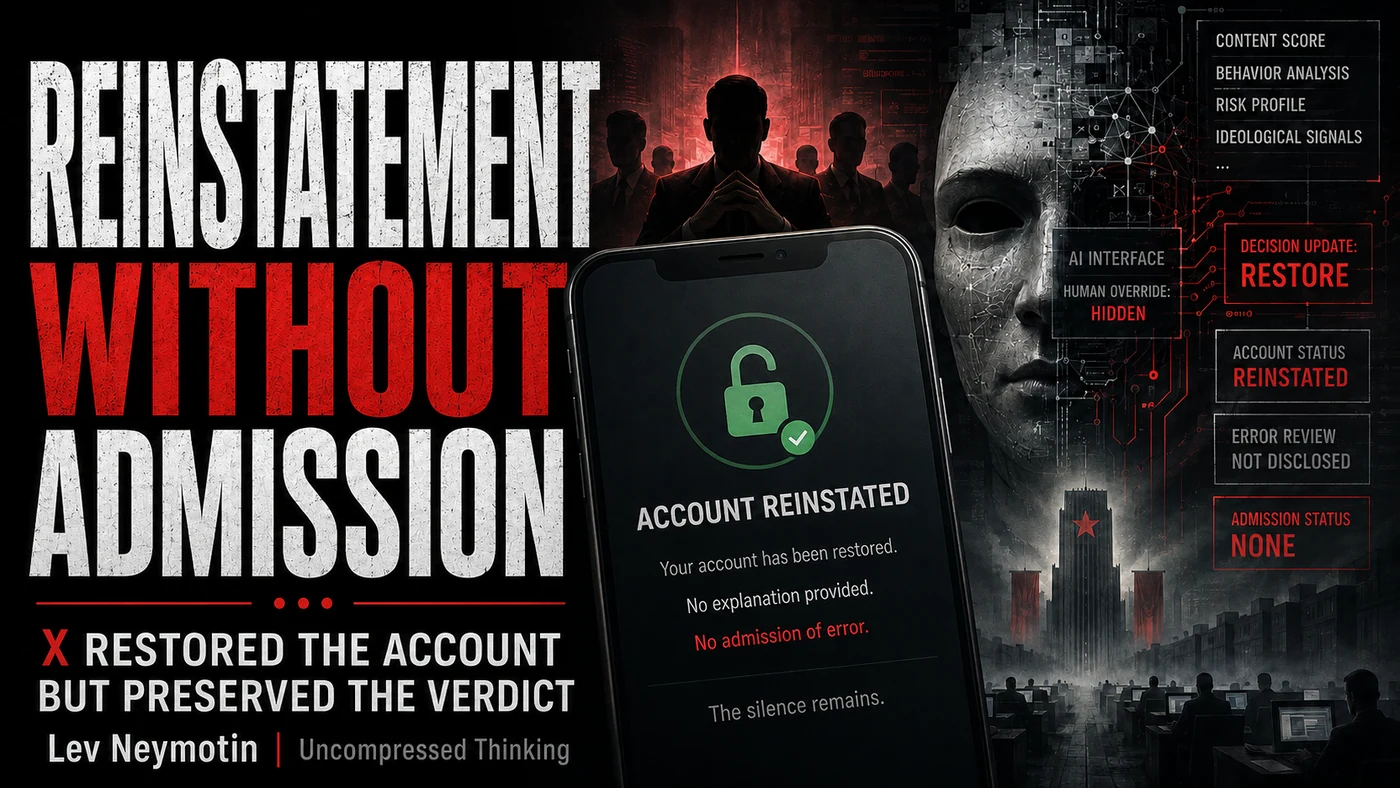
How X Restored the Account but Preserved the Verdict Without a Charge

The account is back. If the story were only about access to X, that would be enough. A button works again. A profile reappears. After several days of suspension notices, appeal rejections, read-only paralysis, and public disappearance, X silently restored my account. Silently is the important word. Restored access is not the same as accountability. The account came back; the reason did not. Do not be comforted too quickly by restoration. An unexplained reversal is not transparency. The machine returns the microphone and keeps the file. But I will not pretend that silence is an explanation.

Essay details
About this collection & how to use it

This collection contains 352 selected essays, research papers, proposals, and supporting documents—with or without podcasts. Introductions draw closely from the PDFs’ preambles, executive summaries, openings, and conclusions. Passages may be shortened and joined; they are close adaptations, not necessarily continuous quotations. They express the source authors’ positions, not independent verification of every claim. Contributed material is attributed separately where identifiable.

Search words in titles, summaries, topics, authors, and podcast titles. Turn on Search inside PDFs to include extractable document text. All search words must appear somewhere in a record or its PDF; use quotation marks for a phrase. A PDF result shows the first relevant file page. Text embedded in images or affected by extraction defects may not be searchable.

Dates are separate: “By Date” sorts by the original PDF file’s last modification, latest first—not its upload or copy date. “By Name” sorts A–Z. “Essay” is a document date where reliably identifiable; “Podcast” is the YouTube publication date. Missing dates are marked “Not stated” and never inferred from the recording. Year-only or month-only dates retain that precision. Newest sorts place undated items last.

304 entries have matched podcasts, representing 280 distinct recordings. A recording may discuss more than one source. 46 entries are essay-only; 2 more remain available with uncertain primary podcast links withheld. Linked podcasts stay on YouTube. PDFs here are unchanged copies, not live links to Dropbox. Retained companion papers and alternate editions remain separate.

Research concepts and proposed medical or financial methods are presented for reading and discussion, not as established treatments or individualized professional advice. A proposal’s presence here does not imply clinical validation, regulatory approval, or an investment recommendation.

Readers can browse freely. Only the signed-in author can exclude or restore essays, assign them to one or more categories, or add categories. Category counts may overlap; the overall total counts each essay once. Confirmed changes are saved in the site database; the original source inventory and PDFs remain unchanged. The PDF reader’s return bar restores your previous view. Search filters remain in the address bar. Copyright and authorship remain with the respective rights holders.

Visit statistics: This Catalog counts page views, PDF reader opens, download clicks, and YouTube link clicks for the author. It uses a temporary, random browser-tab token, not tracking cookies, and stores no names, email addresses, IP addresses, search terms, or individual browsing histories. Duplicate-prevention tokens expire after 48 hours and are removed as new events arrive. Daily totals are retained. Do Not Track and Global Privacy Control signals are respected. YouTube has its own privacy practices.

Privacy & visit counting · Download catalog (CSV) · Download catalog (JSON)

Back