A Universe of QuestionsLEV NEYMOTIN · ESSAY & PODCAST LIBRARY
Browse categories & essays

EXPLORE A SUBJECT

Politics

World and US

2essays in this subject

Enter a number (123 or #123), a topic, or “quotes” for a phrase. Numbers identify essays; use the year filter for dates.

Topics & reading length

Essays in this subject

2 of 2 essays · 1–2 shown

By Date uses the original PDF’s last-modified date. Publication dates are listed separately.

The WSJ, violent settlers, antisemitism, and the responsibility that comes with telling the truth

A troubling WSJ story about violent Israeli extremists pushed me into a question much broader than the article itself. I do not want ugly facts hidden, softened, or excused. But in an atmosphere already charged by antisemitism, Gaza, October 7, and the pro-Palestinian movement, what happens when a true story is framed in a way that allows the actions of a small radical group to spread into an accusation against settlers, Israelis, Jews, or Judaism itself? The essay looks for the line between censorship and sensationalism and asks what responsibility journalism has when truthful reporting can predictably become fuel for collective hatred. My conclusion is simple: when individual guilt can so easily become collective guilt, precision is not an addition to truth. It is part of the truth.

Essay details
Prepared by: Lev Neymotin, PhD

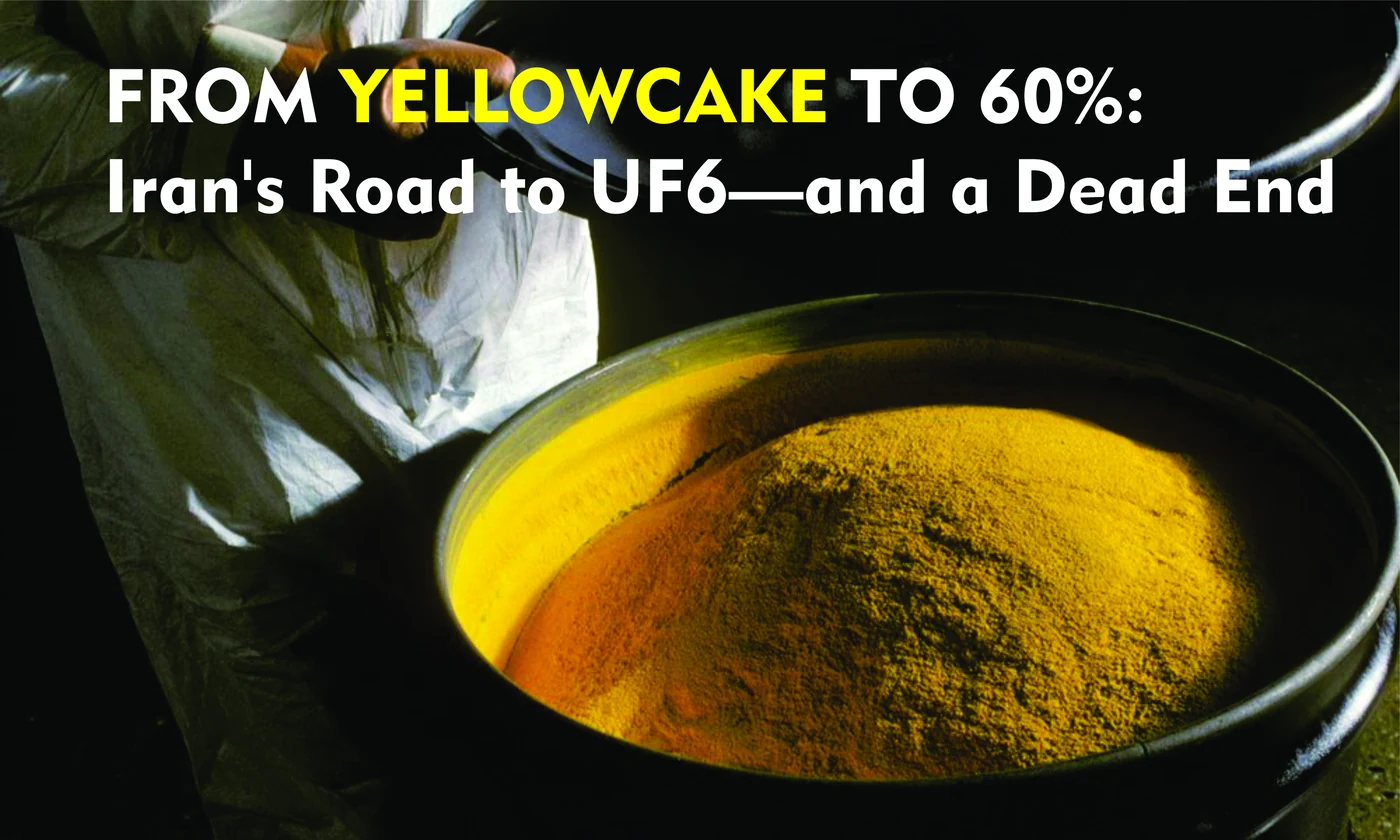
However, in the event of an attack on such storage, the physical behavior of UF₆ and the physics of atmospheric dispersion limit the area of concern. Under real-world dispersion conditions, leaks would pose minimal health threats, and the plume radius would likely not exceed 1–2 km. Moreover, given UF₆’s chemical profile, lack of detection within a few days post-strike would strongly suggest either successful evacuation of material or the survival of cylinders.

Essay details
About this collection & how to use it

This collection contains 352 selected essays, research papers, proposals, and supporting documents—with or without podcasts. Introductions draw closely from the PDFs’ preambles, executive summaries, openings, and conclusions. Passages may be shortened and joined; they are close adaptations, not necessarily continuous quotations. They express the source authors’ positions, not independent verification of every claim. Contributed material is attributed separately where identifiable.

Search words in titles, summaries, topics, authors, and podcast titles. Turn on Search inside PDFs to include extractable document text. All search words must appear somewhere in a record or its PDF; use quotation marks for a phrase. A PDF result shows the first relevant file page. Text embedded in images or affected by extraction defects may not be searchable.

Dates are separate: “By Date” sorts by the original PDF file’s last modification, latest first—not its upload or copy date. “By Name” sorts A–Z. “Essay” is a document date where reliably identifiable; “Podcast” is the YouTube publication date. Missing dates are marked “Not stated” and never inferred from the recording. Year-only or month-only dates retain that precision. Newest sorts place undated items last.

304 entries have matched podcasts, representing 280 distinct recordings. A recording may discuss more than one source. 46 entries are essay-only; 2 more remain available with uncertain primary podcast links withheld. Linked podcasts stay on YouTube. PDFs here are unchanged copies, not live links to Dropbox. Retained companion papers and alternate editions remain separate.

Research concepts and proposed medical or financial methods are presented for reading and discussion, not as established treatments or individualized professional advice. A proposal’s presence here does not imply clinical validation, regulatory approval, or an investment recommendation.

Readers can browse freely. Only the signed-in author can exclude or restore essays, assign them to one or more categories, or add categories. Category counts may overlap; the overall total counts each essay once. Confirmed changes are saved in the site database; the original source inventory and PDFs remain unchanged. The PDF reader’s return bar restores your previous view. Search filters remain in the address bar. Copyright and authorship remain with the respective rights holders.

Visit statistics: This Catalog counts page views, PDF reader opens, download clicks, and YouTube link clicks for the author. It uses a temporary, random browser-tab token, not tracking cookies, and stores no names, email addresses, IP addresses, search terms, or individual browsing histories. Duplicate-prevention tokens expire after 48 hours and are removed as new events arrive. Daily totals are retained. Do Not Track and Global Privacy Control signals are respected. YouTube has its own privacy practices.

Privacy & visit counting · Download catalog (CSV) · Download catalog (JSON)

Back