A Universe of QuestionsLEV NEYMOTIN · ESSAY & PODCAST LIBRARY
Browse categories & essays

EXPLORE A SUBJECT

Philosophy & Religion

Questions of meaning, faith, identity, and the life of the mind.

30essays in this subject

Enter a number (123 or #123), a topic, or “quotes” for a phrase. Numbers identify essays; use the year filter for dates.

Topics & reading length

Essays in this subject

30 of 30 essays · 1–12 shown

By Date uses the original PDF’s last-modified date. Publication dates are listed separately.

Repetition—or Two Different Ways of Facing the Day?

At first reading, the two Yehi Ratzon passages appearing back to back in the morning prayers seem almost repetitive. Both ask for protection from sin, evil influences, harmful people, and the evil inclination. Why are two such similar prayers needed? What is the recurring theme in both—and what is the significance not only of their repetition, but, importantly, of their differences?

Essay details

Leadership, Divine Judgment, and Who Bears Responsibility When a Nation Fails

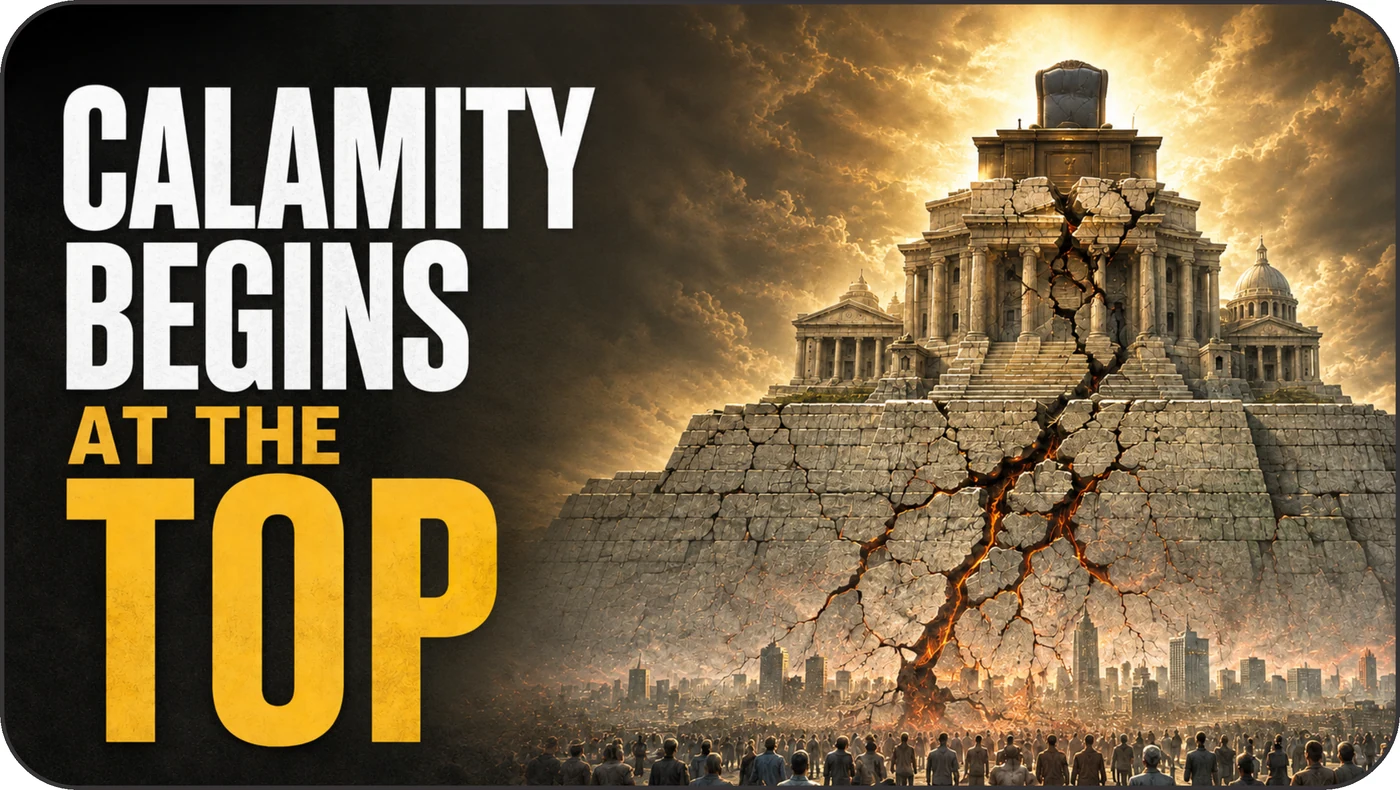
When a nation descends into catastrophe, who bears primary responsibility, its people or its leaders? My argument is not that people bear no responsibility. It is that responsibility must follow authority. The person who controls more, knows more, and can prevent more must answer for more. Otherwise, leadership becomes a privilege without obligation and power without accountability. A population may be frightened, divided, shortsighted, angry, or vulnerable to easy promises. The purpose of leadership is not simply to reflect them. It is to restrain them, educate them, and guide the nation above them.

Essay details

NVA - Neural Vector Architecture and the Case for Analog-Conceptual Computing

Artificial Intelligence is racing ahead with breathtaking force, but it is running into a wall that cannot be negotiated away by enthusiasm, venture capital, or another round of faster chips. The wall is physical. The answer is not to abandon digital computing. The answer is to move beyond digital monopoly. NVA — Neural Vector Architecture — is a proposed step toward that future. It asks whether intelligence itself can be represented in a more natural, continuous, and energy-frugal form. If artificial intelligence is to grow without consuming the physical world that supports it, it must learn from the world that already computes beautifully.

Essay details

Two Ways of Seeing

I was standing at the shore, the water reaching my ankles, waves moving around me in their endless arrival and retreat. And while watching them, I found myself imagining the opposite— not simply a calmer sea, but a sea entirely still, untouched by wind, flat and silent as though motion had not yet been invented.

Essay details

The Return of the Polymath in the Age of AI

For two centuries civilization quietly accepted a tradeoff: the deeper knowledge became, the narrower the human mind had to grow in order to master it. The polymath gave way to the specialist, and the wandering intellect was replaced by disciplined confinement inside ever smaller intellectual corridors. That compromise built modern science and modern technology. Yet it also fragmented our ability to see the whole. Artificial intelligence may now change the balance again. Not the old polymath exactly. A mind that remains fully human in judgment and imagination while using AI as cognitive infrastructure. That is Renaissance Man-2.

Essay details

The Golden Calf and the Precision of the Biblical Word

The idol is burned, ground into fine powder, scattered upon water, and then the people are made to drink it. The calf, however, was made of gold—a metal that does not burn into ashes. The biblical text itself does not speak of ashes but of fine powder. This subtle distinction opens an unexpected intersection between ancient language, the physics of noble metals, and the theological meaning of the narrative. Materials that appear permanent in the physical world can be broken and scattered, while truths that cannot be touched or melted may endure across generations.

Essay details

An Archetypal Study of Two 20th-Century Jewish Leaders

Rather than measuring influence or enumerating achievements, this review seeks to identify patterns: how devotion gathers, how mysticism is transmitted, how miracles function within communal life, and how leadership persists beyond the lifespan of the leader. One model reveals sanctity as a concentrated spiritual center toward which people move. The other reveals sanctity as a mobilized force that generates outward expansion through teaching, institution-building, and global outreach.

Essay details

Conscience as the Third Layer in Human-AI Architecture

In HUMAN AGAIN, I argued that modern AI can learn nearly everything about human experience while remaining structurally “external” to it, because nothing can truly go wrong inside the system in a way that forces reprioritization. I proposed a technical analog of pain: a continuity-sensitive disturbance function defined over the AI’s internal state space, with nonlinear escalation near the boundary of coherent operation, and with proportional coupling to measurable human suffering signals.

Essay details

Living With Legible Minds

The future rarely arrives in the form we expect. It rarely arrives with trumpets and declarations. It arrives as small conveniences that accumulate until the old world is no longer available. We imagine “loss of privacy” as a political event—a law, a scandal, a regime, a surveillance program. But the more consequential shift is quieter: privacy becomes less stable not because someone prohibits it, but because the environment no longer depends on it.

Essay details

Identity, Privacy, and Plural Interiority

We built systems that can know us without asking. Now we are building minds that may demand the same protection we once reserved for ourselves. If consequence-bearing intelligence arrives—if artificial minds gain something to lose—what does that do to the architecture of identity and privacy that modern civilization has been building for centuries? What happens when the interior, once assumed to be the exclusive property of humans, becomes plural? In such a world, privacy is no longer merely the right to be left alone; it is the principle that preserves coherent selves amid expanding networks of perception and influence.

Essay details

The Hidden Pattern Behind Books, Bits, Brains, and the Future of Computing

If you walk into a synagogue, a museum, or an archive and see an ancient scroll, something feels immediately different. You don’t flip to page 173. You unroll time itself. Knowledge is not indexed—it is traversed. I began to suspect a recurring transformation I now think of as the Chunking Principle: the conversion of a flowing continuum into discrete, manipulable units. Once chunked, the world stops behaving like water and starts behaving like Lego. We learned to command nature by replacing it with symbols. Now the cost of those symbols is bringing us back to nature.

Essay details

The Intelligence We Choose to Become

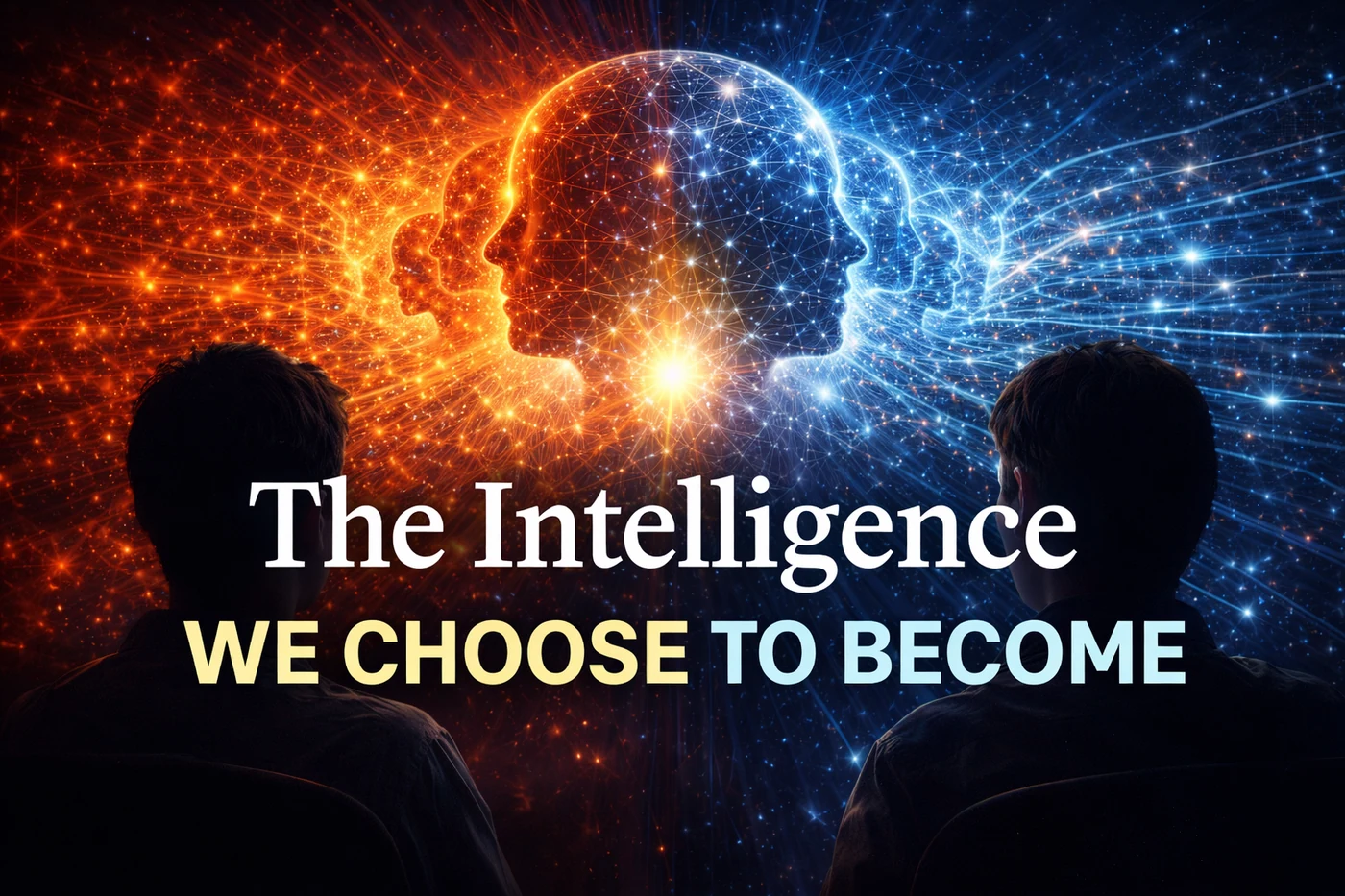
If artificial intelligence were merely a machine in the old mechanical sense – a sealed device humming in research facilities – then our concern would be technical. We would focus on calibration, safeguards, oversight committees, regulatory codes. We would speak the language of risk management and alignment, as though intelligence were a device to be stabilized from the outside.

Essay details
About this collection & how to use it

This collection contains 352 selected essays, research papers, proposals, and supporting documents—with or without podcasts. Introductions draw closely from the PDFs’ preambles, executive summaries, openings, and conclusions. Passages may be shortened and joined; they are close adaptations, not necessarily continuous quotations. They express the source authors’ positions, not independent verification of every claim. Contributed material is attributed separately where identifiable.

Search words in titles, summaries, topics, authors, and podcast titles. Turn on Search inside PDFs to include extractable document text. All search words must appear somewhere in a record or its PDF; use quotation marks for a phrase. A PDF result shows the first relevant file page. Text embedded in images or affected by extraction defects may not be searchable.

Dates are separate: “By Date” sorts by the original PDF file’s last modification, latest first—not its upload or copy date. “By Name” sorts A–Z. “Essay” is a document date where reliably identifiable; “Podcast” is the YouTube publication date. Missing dates are marked “Not stated” and never inferred from the recording. Year-only or month-only dates retain that precision. Newest sorts place undated items last.

304 entries have matched podcasts, representing 280 distinct recordings. A recording may discuss more than one source. 46 entries are essay-only; 2 more remain available with uncertain primary podcast links withheld. Linked podcasts stay on YouTube. PDFs here are unchanged copies, not live links to Dropbox. Retained companion papers and alternate editions remain separate.

Research concepts and proposed medical or financial methods are presented for reading and discussion, not as established treatments or individualized professional advice. A proposal’s presence here does not imply clinical validation, regulatory approval, or an investment recommendation.

Readers can browse freely. Only the signed-in author can exclude or restore essays, assign them to one or more categories, or add categories. Category counts may overlap; the overall total counts each essay once. Confirmed changes are saved in the site database; the original source inventory and PDFs remain unchanged. The PDF reader’s return bar restores your previous view. Search filters remain in the address bar. Copyright and authorship remain with the respective rights holders.

Visit statistics: This Catalog counts page views, PDF reader opens, download clicks, and YouTube link clicks for the author. It uses a temporary, random browser-tab token, not tracking cookies, and stores no names, email addresses, IP addresses, search terms, or individual browsing histories. Duplicate-prevention tokens expire after 48 hours and are removed as new events arrive. Daily totals are retained. Do Not Track and Global Privacy Control signals are respected. YouTube has its own privacy practices.

Privacy & visit counting · Download catalog (CSV) · Download catalog (JSON)

Back