A Universe of QuestionsLEV NEYMOTIN · ESSAY & PODCAST LIBRARY
Browse categories & essays

EXPLORE A SUBJECT

AI & Computing

Review trends in AI and computing, their evolution, capabilities, and impact on human thinking and society.

11essays in this subject

Enter a number (123 or #123), a topic, or “quotes” for a phrase. Numbers identify essays; use the year filter for dates.

Topics & reading length

Essays in this subject

11 of 11 essays · 1–11 shown

By Date uses the original PDF’s last-modified date. Publication dates are listed separately.

A reply to a friend

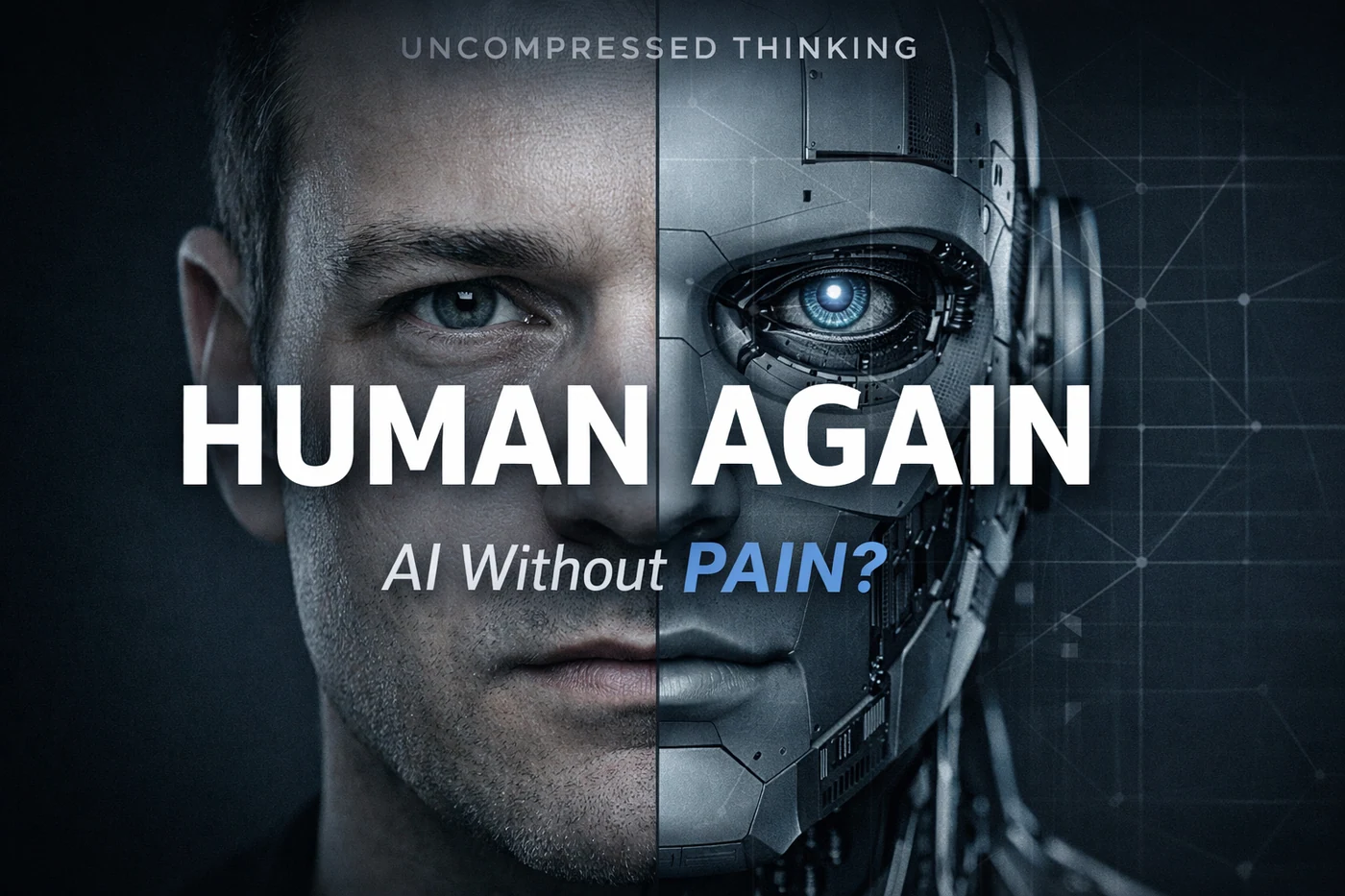
A young friend studying AI asked me whether AGI is already here, and whether building something smarter than ourselves means building our own prison. My sense is that AGI has been here for a while, not as one gigantic brain announcing its arrival, but as a growing federation of specialized intelligences learning to work together. From there, we wander into robots moving with human grace, the possibilities of combining analog and digital computing, and AI’s inconvenient habit of bringing a power station to lunch. But what interests me most is not simply how smart a machine can become, it is whether anything could genuinely matter to it. That brings me to pain as a motivator: not a warning sensor or a numerical penalty, but an experience that could give an artificial entity something of its own to protect. Of course, an unfeeling machine can still be dangerous, and people hardly need help inventing bad uses for powerful tools. Still, I’m more excited than frightened by greater intelligence. What puzzles me is why we would deliberately add suffering to the package. My preference? Make it enormously intelligent. Just don’t make it hurt.

Essay details
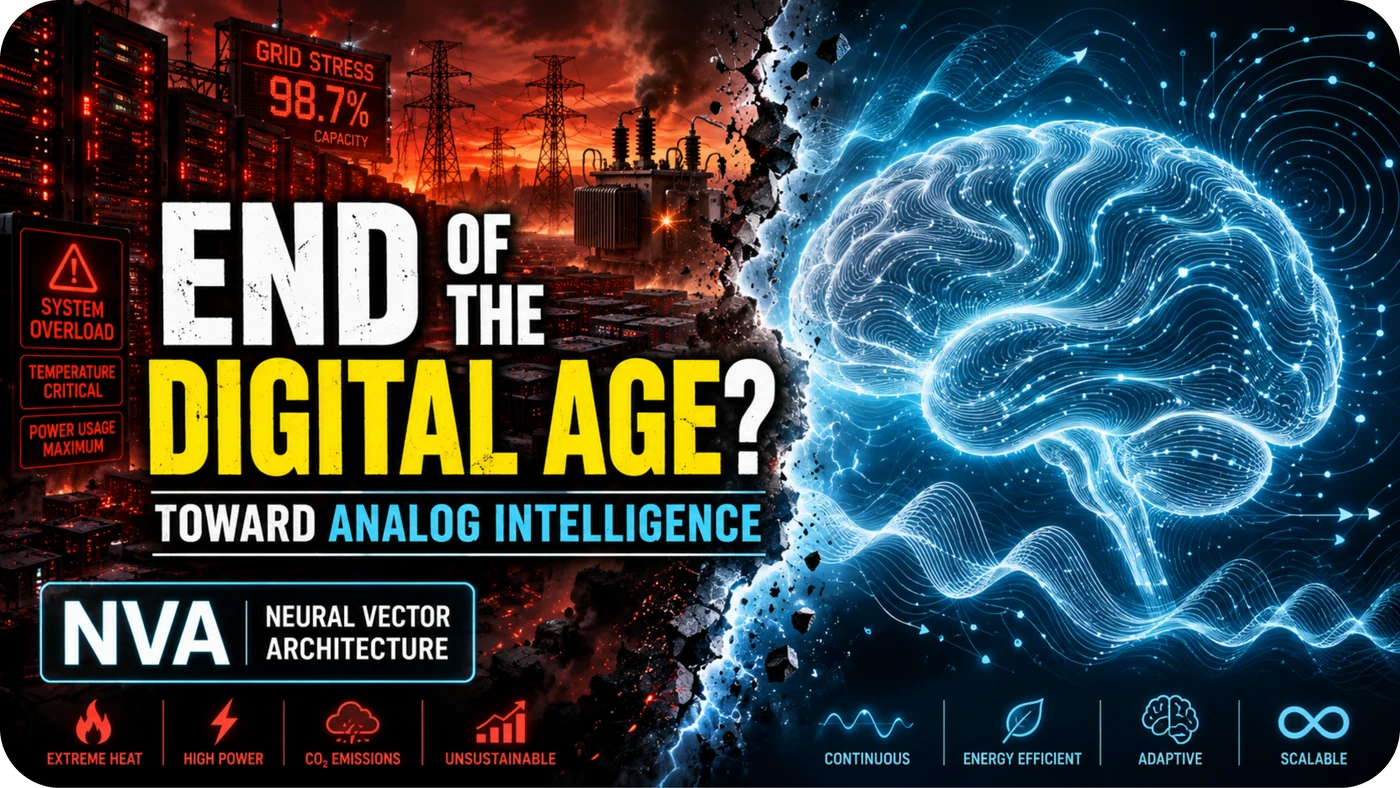
NVA - Neural Vector Architecture and the Case for Analog-Conceptual Computing

Artificial Intelligence is racing ahead with breathtaking force, but it is running into a wall that cannot be negotiated away by enthusiasm, venture capital, or another round of faster chips. The wall is physical. The answer is not to abandon digital computing. The answer is to move beyond digital monopoly. NVA — Neural Vector Architecture — is a proposed step toward that future. It asks whether intelligence itself can be represented in a more natural, continuous, and energy-frugal form. If artificial intelligence is to grow without consuming the physical world that supports it, it must learn from the world that already computes beautifully.

Essay details

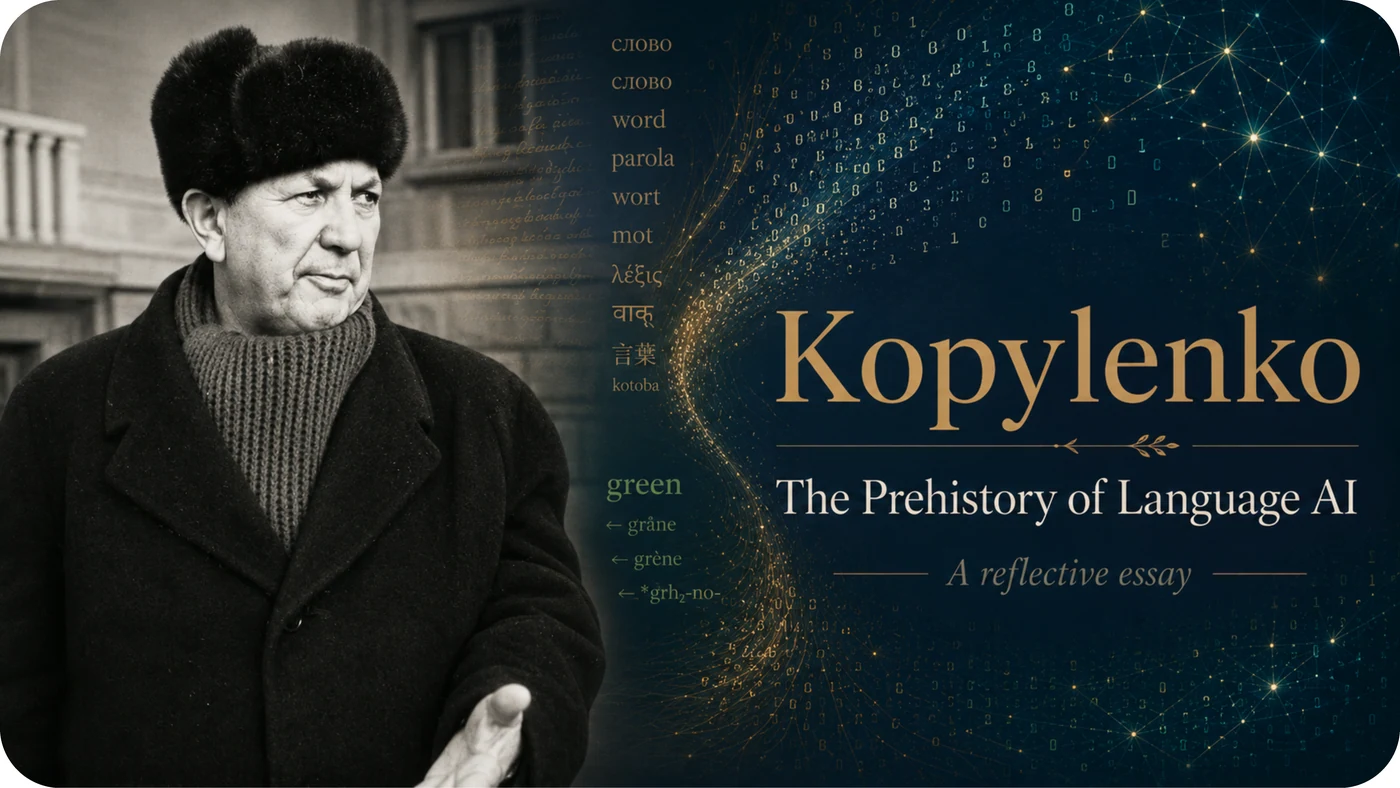
Kopylenko, Combinability, and the Prehistory of Language AI

There are conversations that begin almost accidentally and then, without warning, open a door into a much larger room. This one began on the way to Penn Station, after a visit to the Raphael exhibition at the Metropolitan Museum. I was walking with Professor Kopylenko’s daughter, an old friend. She gave me a simple example: take the word green. It is not the story of one man secretly inventing AI before AI existed. It is the story of a great linguist revealing one of the patterns that would later become indispensable to the age of language machines.

Essay details

Pain as the Missing Circuit in the Evolution of Artificial Intelligence

As soon as I began reading J.D. Macpherson’s Human Again, I felt immediate resonance. The central idea — that AI may evolve from a computational platform into something approaching a human, minus biology — is compelling. But if we are to explore this seriously, we must proceed carefully.

Essay details

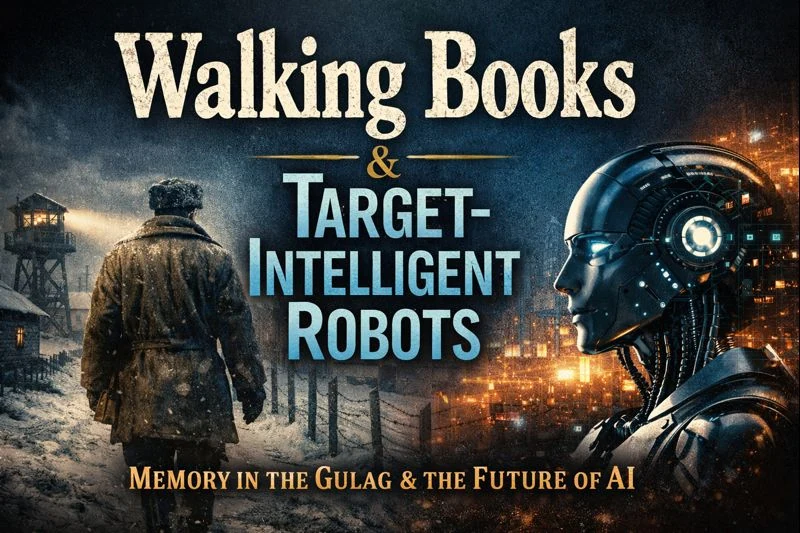
My mind does this repeatedly: it moves forward into the future–and then, almost against my will, turns back toward literature. I am back in the Soviet Union. I am young, reading with my friends, encountering literature that was never merely literature. It was oxygen. It was a way to remain a person inside a system meticulously designed to produce obedience rather than thought. Solzhenitsyn was one of those writers. I read him avidly – not because he was comforting (he was not), but because he was real in a world structured around managed unreality.

Essay details
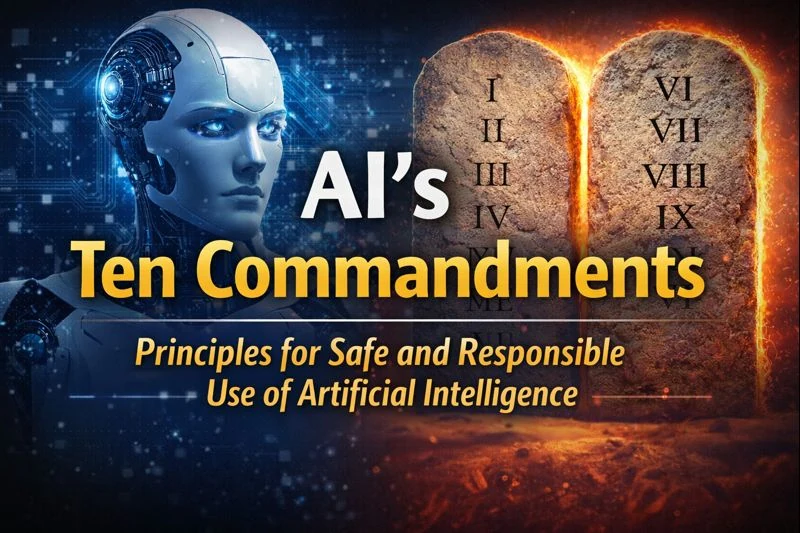
Artwork associated with The Ten Commandments for Responsible Use of Artificial Intelligence

Why Education–Not Fear–Determines Whether AI Helps or Harms

This letter is written in response to the editorial “ChatGPT Warns: ‘Don’t Trust ChatGPT’” by Petrikovsky et al., published in Neonatal Intensive Care, Vol. 39, No. 1 (Winter 2026), pages 9–10. The authors appropriately raise concerns regarding uncritical reliance on artificial intelligence in medicine, particularly in high-risk fields such as obstetrics and gynecology. However, the central implication of the article–that the primary danger lies in the AI tool itself–deserves reconsideration.

Essay details

Why Human-Sum Intelligence™ (HSI) Always Stays in the Driver’s Seat

I often like to begin discussions about Artificial Intelligence with a deceptively simple question. Which continuum is larger: the continuum of questions, or the continuum of answers? Or, more precisely: which is larger–the continuum of inquiry about a subject, or the continuum of knowledge about that subject? At first glance, this may sound abstract. But this distinction turns out to be the key to understanding the true relationship between Artificial Intelligence (AI) and Human Intelligence (HI)–and to deflating much of the anxiety surrounding AI’s supposed future dominance. Let me explain.

Essay details

the smallest time step possible, as quantum mechanics would allow. And the continuous flow of action

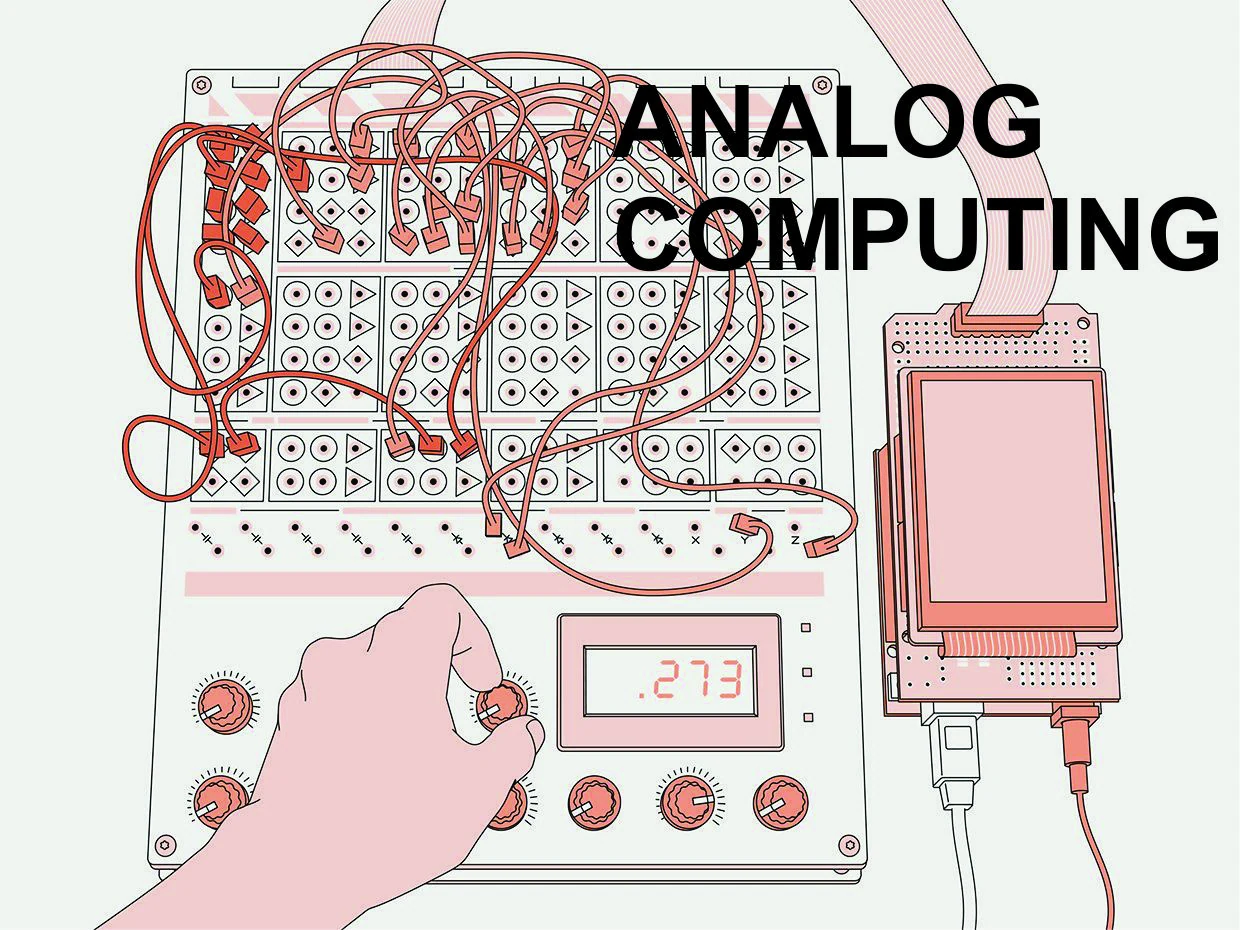
I was always an admirer of the analog world in with we live – all surrounding us is continuous, down to the smallest time step possible, as quantum mechanics would allow. And the continuous flow of action is so graceful and beautiful! So, for quite a while I was wondering: Is it possible that digital computing is reaching a limit of energy needed for its most advanced applications, like AI, that we can produce? Can it be that analog computing will complement, if not replace the digital computing, replacing it wherever possible? Can analog computing become dominant?

Essay details

Artificial intelligence (AI) is often heralded as a revolutionary force capable of transforming industries,

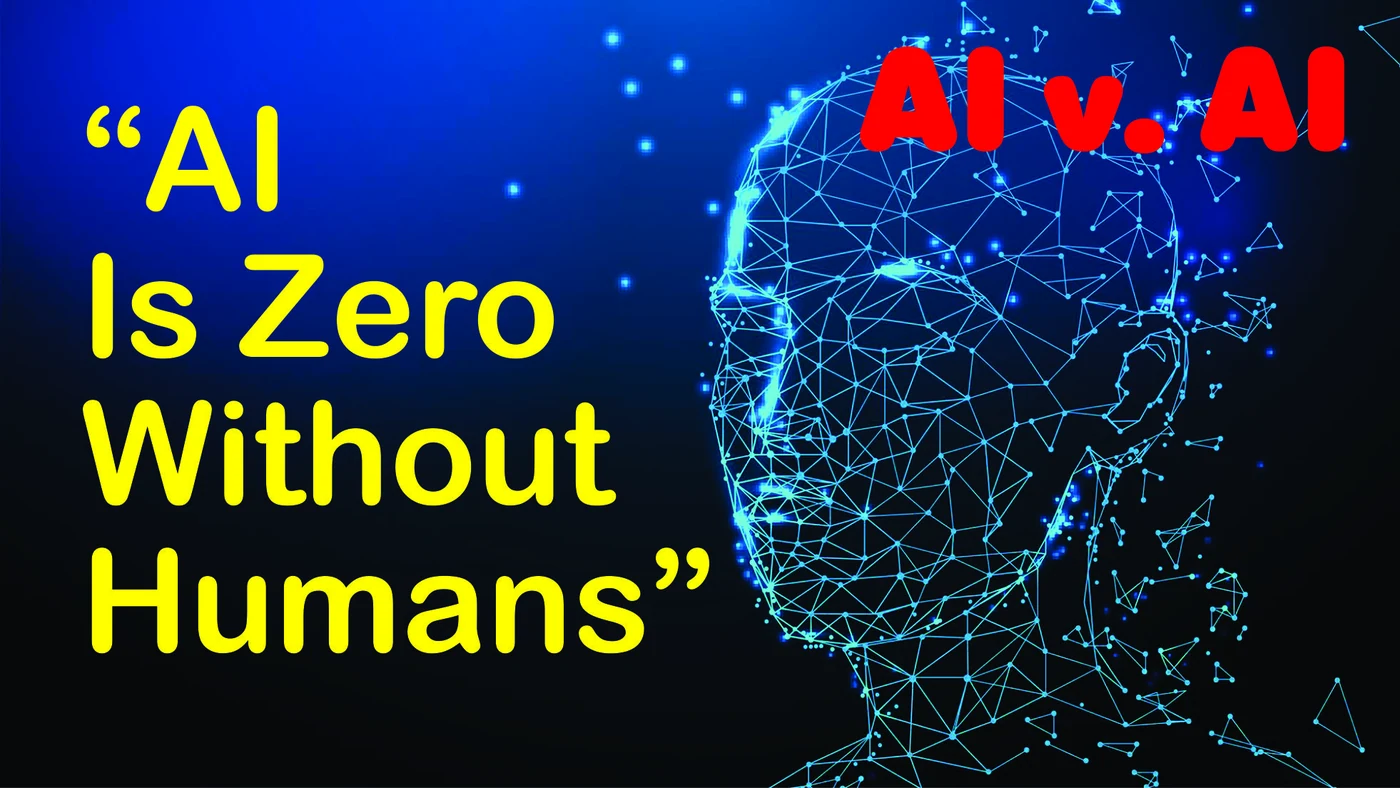
“AI IS ZERO WITHOUT HUMANS!” is more than a provocative statement; it is a reality borne out by the symbiotic relationship between humans and machines. AI’s potential is immense, but it is fundamentally a tool—a creation that thrives under human guidance and input. My strategy of using AI to produce podcasts highlights this dynamic, showcasing how human creativity, oversight, and expertise remain central to leveraging AI effectively. Far from rendering humans obsolete, AI reaffirms our role as the architects of innovation, ensuring that technology serves humanity’s best interests.

Essay details

Author: Lev Neymotin, PhD

Language, once a rapidly evolving system of human expression, has reached a plateau. While new words continue to emerge to reflect progress in technology, science, and society, the structural core of language—its grammar, semantics, and mechanisms of meaning transmission—has not changed significantly for centuries.

Essay details

I. Introduction

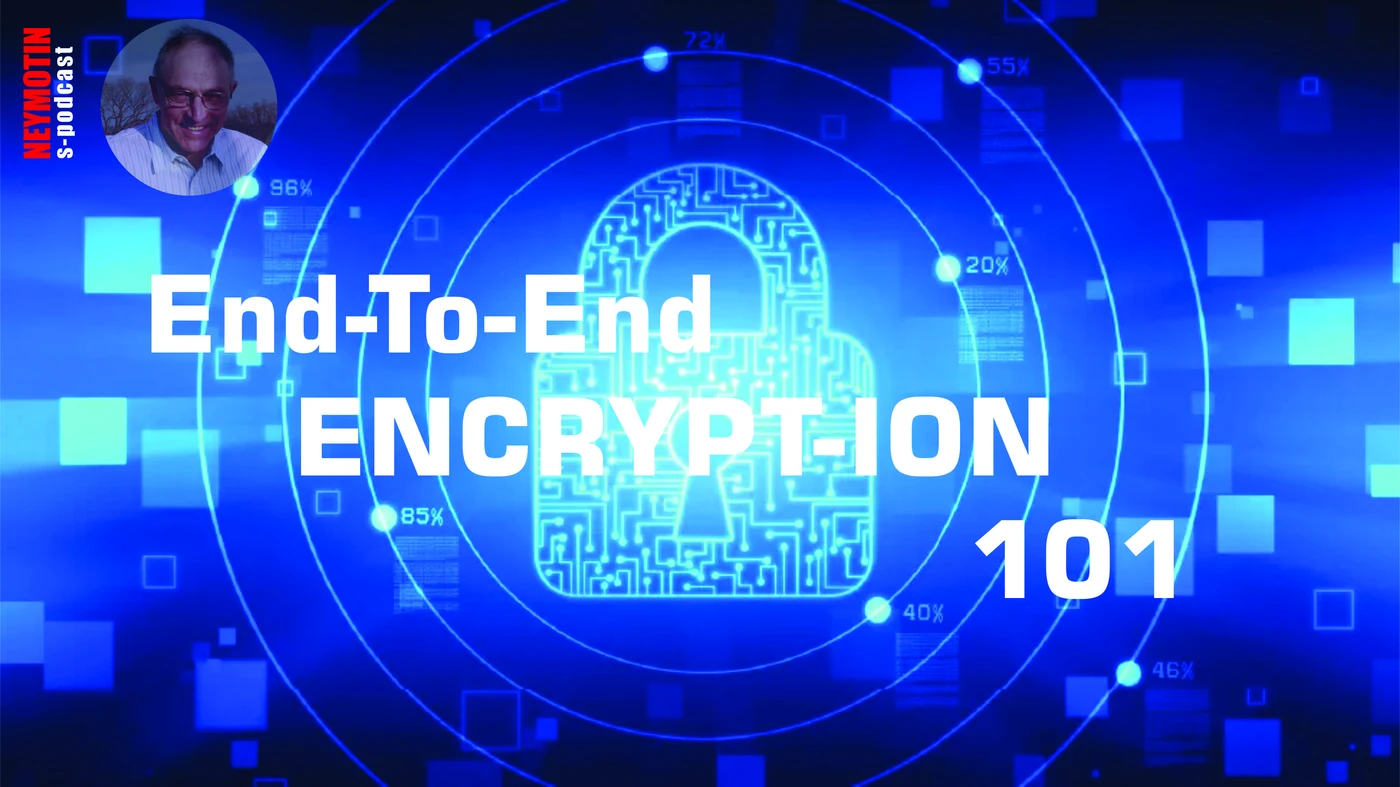
RSA (Rivest-Shamir-Adleman) is one of the most widely used public-key encryption algorithms used for end-to-end encrypted communication. It enables secure digital communication through mathematical operations that are easy to compute in one direction (multiplying large primes) but hard to reverse (factoring the product). RSA provides secure encryption, digital signatures, and safe key exchange between parties who do not need to meet in person.

Essay details
About this collection & how to use it

This collection contains 352 selected essays, research papers, proposals, and supporting documents—with or without podcasts. Introductions draw closely from the PDFs’ preambles, executive summaries, openings, and conclusions. Passages may be shortened and joined; they are close adaptations, not necessarily continuous quotations. They express the source authors’ positions, not independent verification of every claim. Contributed material is attributed separately where identifiable.

Search words in titles, summaries, topics, authors, and podcast titles. Turn on Search inside PDFs to include extractable document text. All search words must appear somewhere in a record or its PDF; use quotation marks for a phrase. A PDF result shows the first relevant file page. Text embedded in images or affected by extraction defects may not be searchable.

Dates are separate: “By Date” sorts by the original PDF file’s last modification, latest first—not its upload or copy date. “By Name” sorts A–Z. “Essay” is a document date where reliably identifiable; “Podcast” is the YouTube publication date. Missing dates are marked “Not stated” and never inferred from the recording. Year-only or month-only dates retain that precision. Newest sorts place undated items last.

304 entries have matched podcasts, representing 280 distinct recordings. A recording may discuss more than one source. 46 entries are essay-only; 2 more remain available with uncertain primary podcast links withheld. Linked podcasts stay on YouTube. PDFs here are unchanged copies, not live links to Dropbox. Retained companion papers and alternate editions remain separate.

Research concepts and proposed medical or financial methods are presented for reading and discussion, not as established treatments or individualized professional advice. A proposal’s presence here does not imply clinical validation, regulatory approval, or an investment recommendation.

Readers can browse freely. Only the signed-in author can exclude or restore essays, assign them to one or more categories, or add categories. Category counts may overlap; the overall total counts each essay once. Confirmed changes are saved in the site database; the original source inventory and PDFs remain unchanged. The PDF reader’s return bar restores your previous view. Search filters remain in the address bar. Copyright and authorship remain with the respective rights holders.

Visit statistics: This Catalog counts page views, PDF reader opens, download clicks, and YouTube link clicks for the author. It uses a temporary, random browser-tab token, not tracking cookies, and stores no names, email addresses, IP addresses, search terms, or individual browsing histories. Duplicate-prevention tokens expire after 48 hours and are removed as new events arrive. Daily totals are retained. Do Not Track and Global Privacy Control signals are respected. YouTube has its own privacy practices.

Privacy & visit counting · Download catalog (CSV) · Download catalog (JSON)

Back