A Universe of QuestionsLEV NEYMOTIN · ESSAY & PODCAST LIBRARY
Browse categories & essays

EXPLORE A SUBJECT

Education & Learning

Learning, education, and their individual and social consequences.

7essays in this subject

Enter a number (123 or #123), a topic, or “quotes” for a phrase. Numbers identify essays; use the year filter for dates.

Topics & reading length

Essays in this subject

7 of 7 essays · 1–7 shown

By Date uses the original PDF’s last-modified date. Publication dates are listed separately.

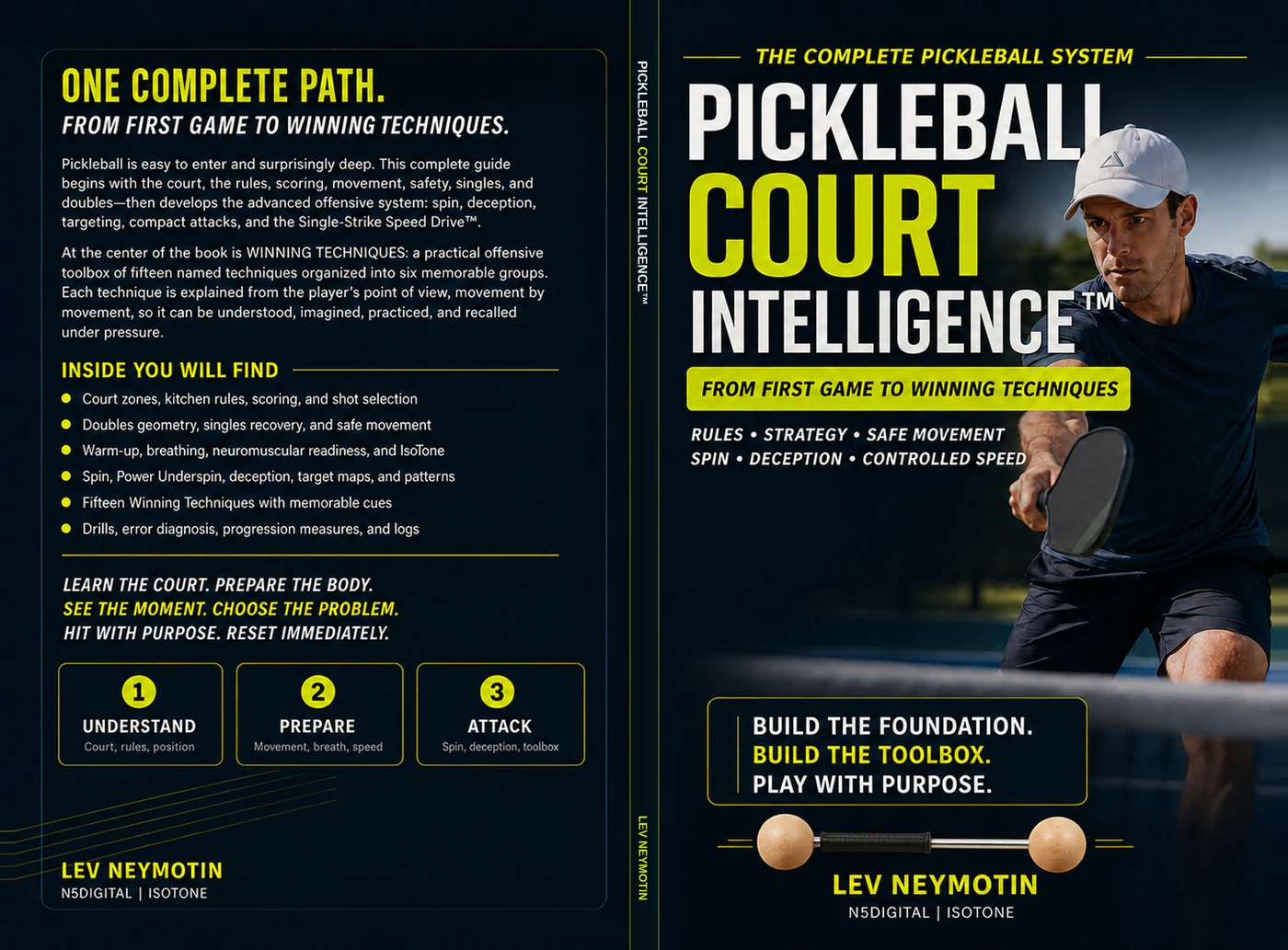
From First Game to Winning Techniques

The original Pickleball Player’s Guide explained the game from the beginning: court zones, kitchen rules, the dead zone, serve and return, singles and doubles, scoring, movement, safety, warm-up, and controlled speed. The Single-Strike Speed Drive™ guide began where that foundation ended. It developed the advanced offensive layer: attack permission, targeting, spin, Power Underspin, deception, compact acceleration, recovery, and a complete Winning Techniques toolbox. Those subjects belong together. A player cannot use an advanced weapon intelligently without understanding the court, and court knowledge becomes more valuable when the player knows how to convert position into pressure. This combined book therefore presents one continuous path from the first game to purposeful advanced offense.

Essay details
Pilot Program for Curious and Motivated Learners

iComprehend is grounded in a simple but often underestimated belief: children can understand complex ideas far earlier than we assume, if they are trusted, challenged respectfully, and not constrained by artificial simplifications. Its objective is to cultivate listening-based comprehension, imagination-driven reasoning, and metacognitive awareness in children by challenging them to engage with complex ideas through audio alone and then reflect on how their understanding evolves when those same ideas are encountered in written form. The project is intentionally exploratory rather than evaluative, prioritizing curiosity, imagination, and honest reflection over correctness or performance.

Essay details

Have you ever walked into a classroom, looked at a test, and felt your stomach suddenly turn into a

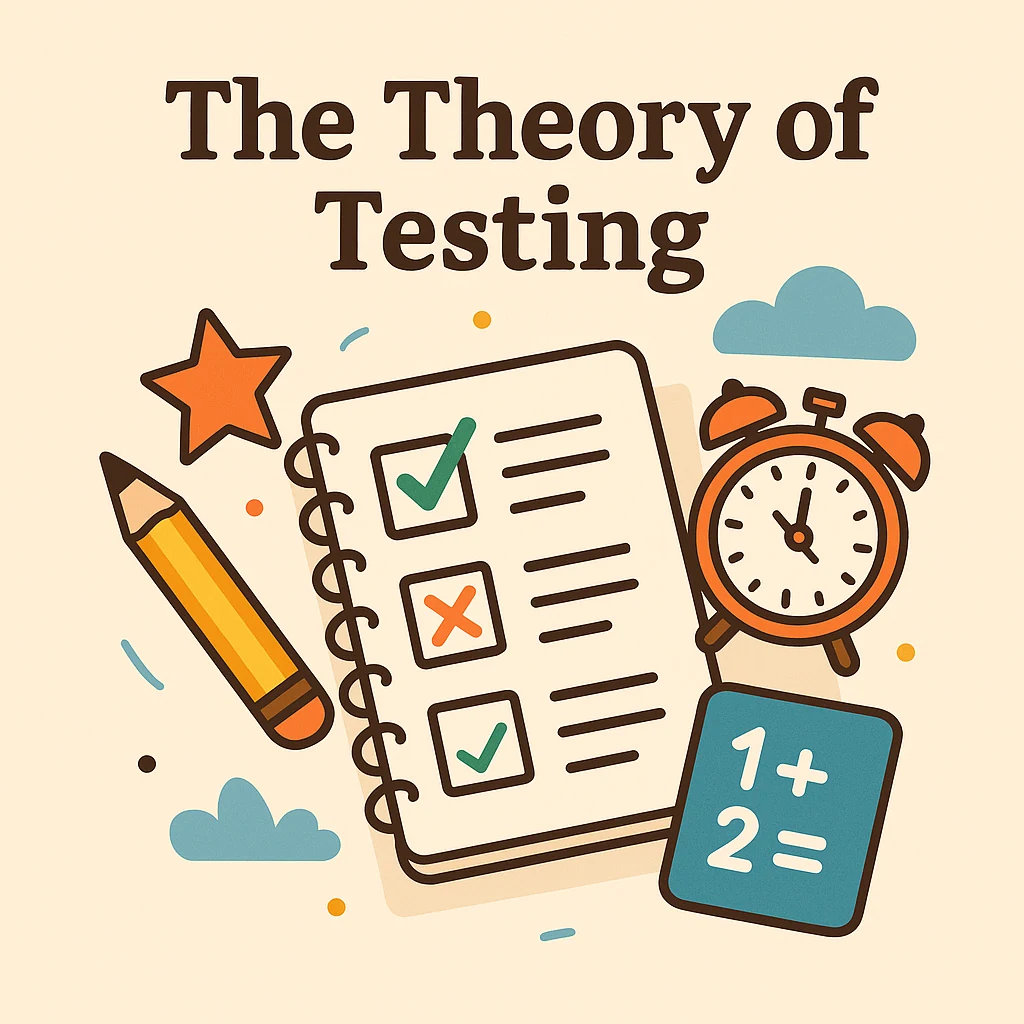
Now that you know how tests are built, here is the part you MUST remember: You are not supposed to solve all the questions. Not today. Not tomorrow. Not even the kid with glasses who solves Rubik’s cubes behind his back. Nobody solves everything. And that’s OK. The goal is not perfection. The goal is doing your best on the questions you can reasonably reach. Tests aren’t designed to defeat you—they’re designed to spread everyone out on a curve so teachers can see who did a little more, who did a little less, and who is ready for what.

Essay details

Learning Without Memorizing: A Journey Through Worlds of Change, Form, and Harmony

The pages that follow are not about arithmetic, geometry, or trigonometry as school defines them — they are about the patterns that make the world coherent. They are about why the sky curves, why fairness feels measurable, why a melody sounds complete, and why a bridge can bend without falling. If this book has a goal, it is this: to restore the pleasure of discovering how things connect. Mathematics is not a subject — it is a language of relationships.

Essay details

A Guide and Action Plan for Parents, Mentors, and Educators

This guide offers a structured, intellectually focused plan to help gifted and sensitive students overcome test anxiety while rediscovering the pleasure of learning. It reframes standardized testing as a limited system for measuring readiness—rather than a verdict on intelligence or character—and introduces strategies that replace fear with curiosity and humor. Combining emotional reframing, cognitive self-observation, and perspectivebuilding, it provides a framework for parents and teachers to guide students toward calm, confident performance.

Essay details
Artwork associated with Human-AI Interface Curriculum Development Plan

For Private, Charter, and Independent Schools (Grades K–6, Expandable to K–12)

Artificial Intelligence is no longer a futuristic vision—it is a transformative force in today’s economy, culture, and daily life. As AI systems redefine white-collar work and reshape the demands of professional skillsets, the leaders of tomorrow are sitting in K–12 classrooms today. To prepare students for this rapidly changing landscape, early education must go beyond using AI as a teacher’s convenience tool (e.g., test generation, grading assistance). Instead, we must develop students’ ability to communicate with, collaborate with, and responsibly guide AI systems—not just use them.

Essay details
Original thumbnail artwork for Study: The Potential Perils of Overeducation

By “overeducation,” I mean a condition where individuals, due to their advanced education or expertise, become so confident in their knowledge that they believe they are infallible. These individuals may be highly educated but lack the wisdom or practical judgment needed to make sound decisions. I will refer to this “overeducated and underbrained duality” as the “O&U Duality Law.” For the purpose of this study, I will focus on the Democratic Party in the United States as the first case of analysis. In Phase 2, the Republican Party will be a subject of this study.

Essay details
About this collection & how to use it

This collection contains 352 selected essays, research papers, proposals, and supporting documents—with or without podcasts. Introductions draw closely from the PDFs’ preambles, executive summaries, openings, and conclusions. Passages may be shortened and joined; they are close adaptations, not necessarily continuous quotations. They express the source authors’ positions, not independent verification of every claim. Contributed material is attributed separately where identifiable.

Search words in titles, summaries, topics, authors, and podcast titles. Turn on Search inside PDFs to include extractable document text. All search words must appear somewhere in a record or its PDF; use quotation marks for a phrase. A PDF result shows the first relevant file page. Text embedded in images or affected by extraction defects may not be searchable.

Dates are separate: “By Date” sorts by the original PDF file’s last modification, latest first—not its upload or copy date. “By Name” sorts A–Z. “Essay” is a document date where reliably identifiable; “Podcast” is the YouTube publication date. Missing dates are marked “Not stated” and never inferred from the recording. Year-only or month-only dates retain that precision. Newest sorts place undated items last.

304 entries have matched podcasts, representing 280 distinct recordings. A recording may discuss more than one source. 46 entries are essay-only; 2 more remain available with uncertain primary podcast links withheld. Linked podcasts stay on YouTube. PDFs here are unchanged copies, not live links to Dropbox. Retained companion papers and alternate editions remain separate.

Research concepts and proposed medical or financial methods are presented for reading and discussion, not as established treatments or individualized professional advice. A proposal’s presence here does not imply clinical validation, regulatory approval, or an investment recommendation.

Readers can browse freely. Only the signed-in author can exclude or restore essays, assign them to one or more categories, or add categories. Category counts may overlap; the overall total counts each essay once. Confirmed changes are saved in the site database; the original source inventory and PDFs remain unchanged. The PDF reader’s return bar restores your previous view. Search filters remain in the address bar. Copyright and authorship remain with the respective rights holders.

Visit statistics: This Catalog counts page views, PDF reader opens, download clicks, and YouTube link clicks for the author. It uses a temporary, random browser-tab token, not tracking cookies, and stores no names, email addresses, IP addresses, search terms, or individual browsing histories. Duplicate-prevention tokens expire after 48 hours and are removed as new events arrive. Daily totals are retained. Do Not Track and Global Privacy Control signals are respected. YouTube has its own privacy practices.

Privacy & visit counting · Download catalog (CSV) · Download catalog (JSON)

Back