A Universe of QuestionsLEV NEYMOTIN · ESSAY & PODCAST LIBRARY
Browse categories & essays

EXPLORE A SUBJECT

Science

Physics, Chemistry, Biology

17essays in this subject

Enter a number (123 or #123), a topic, or “quotes” for a phrase. Numbers identify essays; use the year filter for dates.

Topics & reading length

Essays in this subject

17 of 17 essays · 1–12 shown

By Date uses the original PDF’s last-modified date. Publication dates are listed separately.

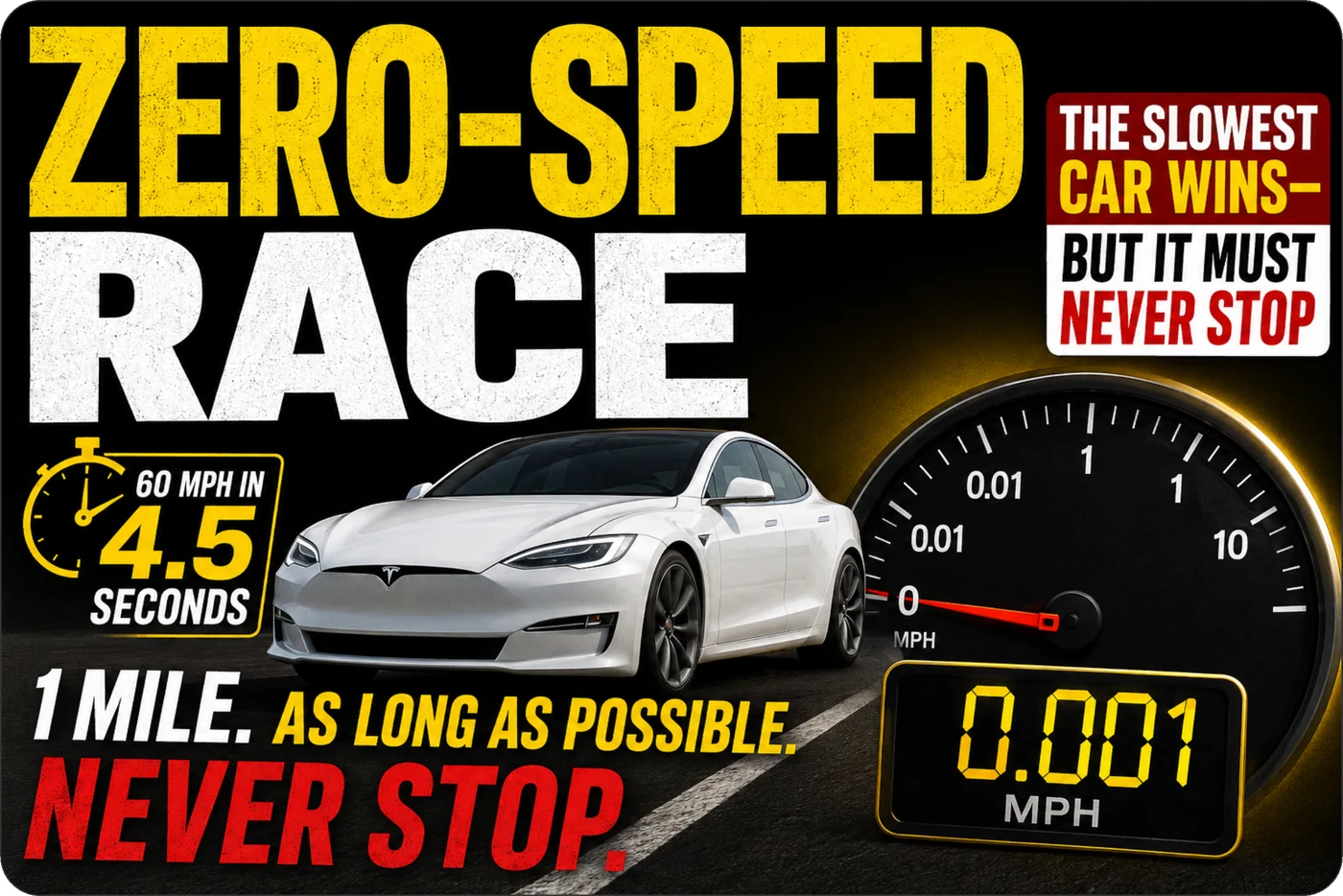
The slowest car wins. But it must never stop.

I was admiring the SpaceX launch of the Nancy Grace Roman Space Telescope the other day. What a gorgeous liftoff! The enormous rocket rose from the launchpad gently and smoothly, like a hot knife through butter. There was fire, smoke, tremendous noise and almost unimaginable power underneath it, but the motion itself looked beautifully controlled. The rocket simply lifted and climbed.

Essay details
From Optical Fibers to the Memory of the Universe

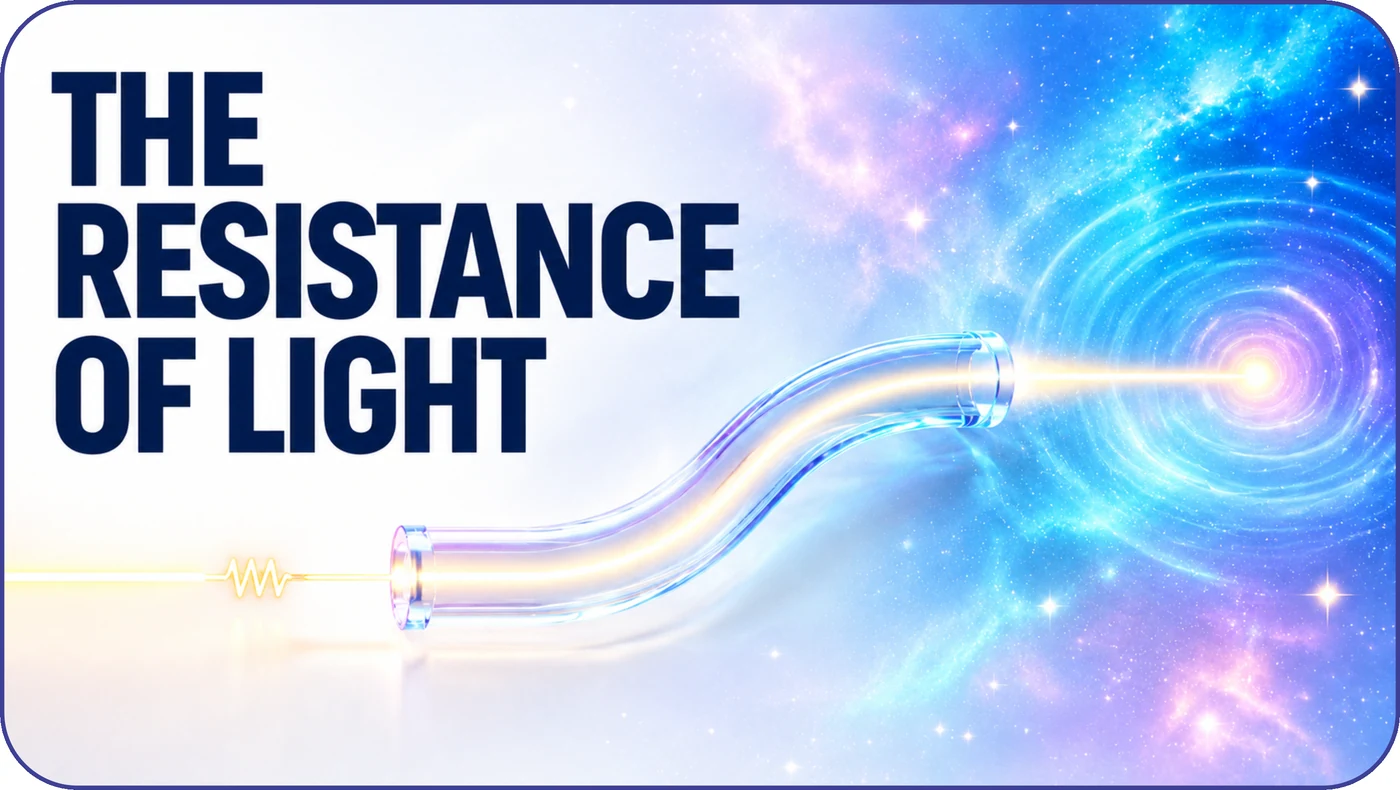
It begins with a simple question: does light experience resistance? Following that question through glass, optical fibers, empty space, and the Big Bang reveals how radiation exchanges momentum, shapes matter, and leaves its signature on cosmic history.

Essay details

Why Intelligence Remains an Open System

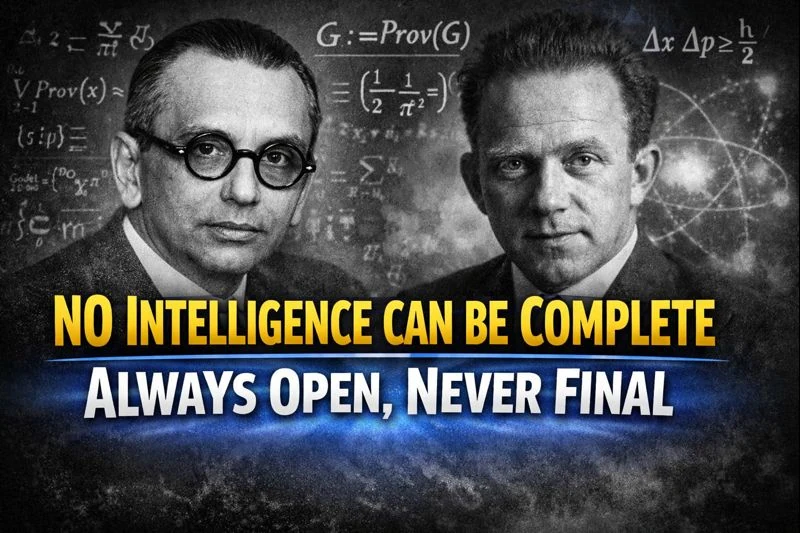
Gödel’s incompleteness theorems and Heisenberg’s uncertainty principle do not rescue humanity from the risks posed by artificial intelligence. They do something subtler and more important. They ensure that no intelligence, artificial or human, can ever legitimately claim the final word. Incompleteness does not make AI safe. It makes closure impossible. The greatest danger lies not in machines that exceed us, but in our willingness to treat any system as complete, authoritative, and beyond question. The task ahead is not to build perfect intelligence, but to learn how to live with powerful, incomplete ones.

Essay details

A Conceptual Framework for Visualizing Multidimensional State Spaces

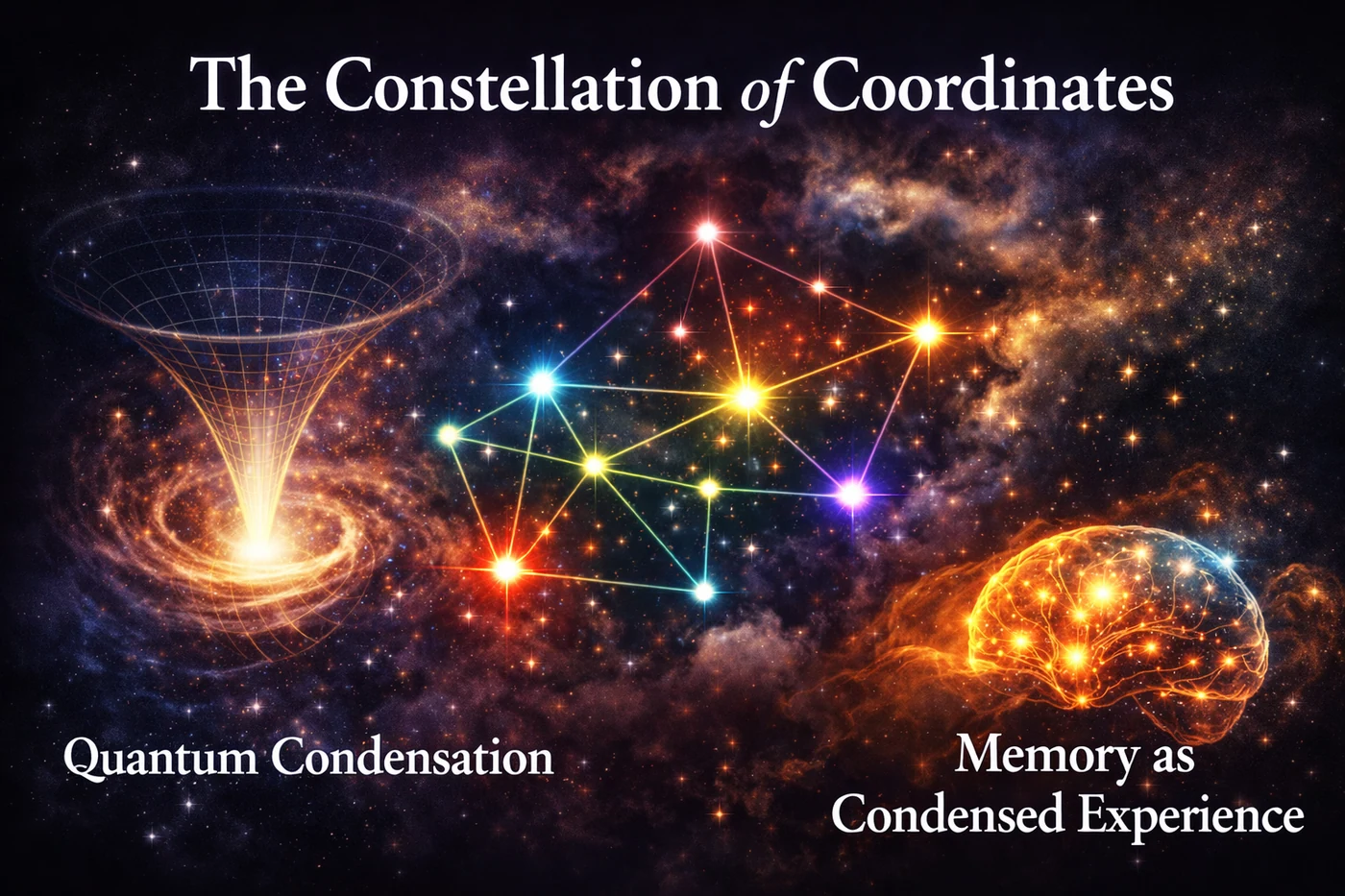
How can a system be simultaneously understood as a unified object and as a carrier of many independent, non-mixable parameters? In the Constellation of Coordinates, each parameter is imagined as a coordinate star whose brightness or position encodes the value of the corresponding variable. The configuration formed by the ensemble of these stars—the constellation—uniquely identifies the system’s state. Changes in the system correspond to the gradual transformation of this constellation over time. The metaphor preserves the independence of the underlying coordinates while presenting the state as a coherent and identifiable structure.

Essay details

Event-Matter, Re-Expansion, and the Living Physics of the Mind

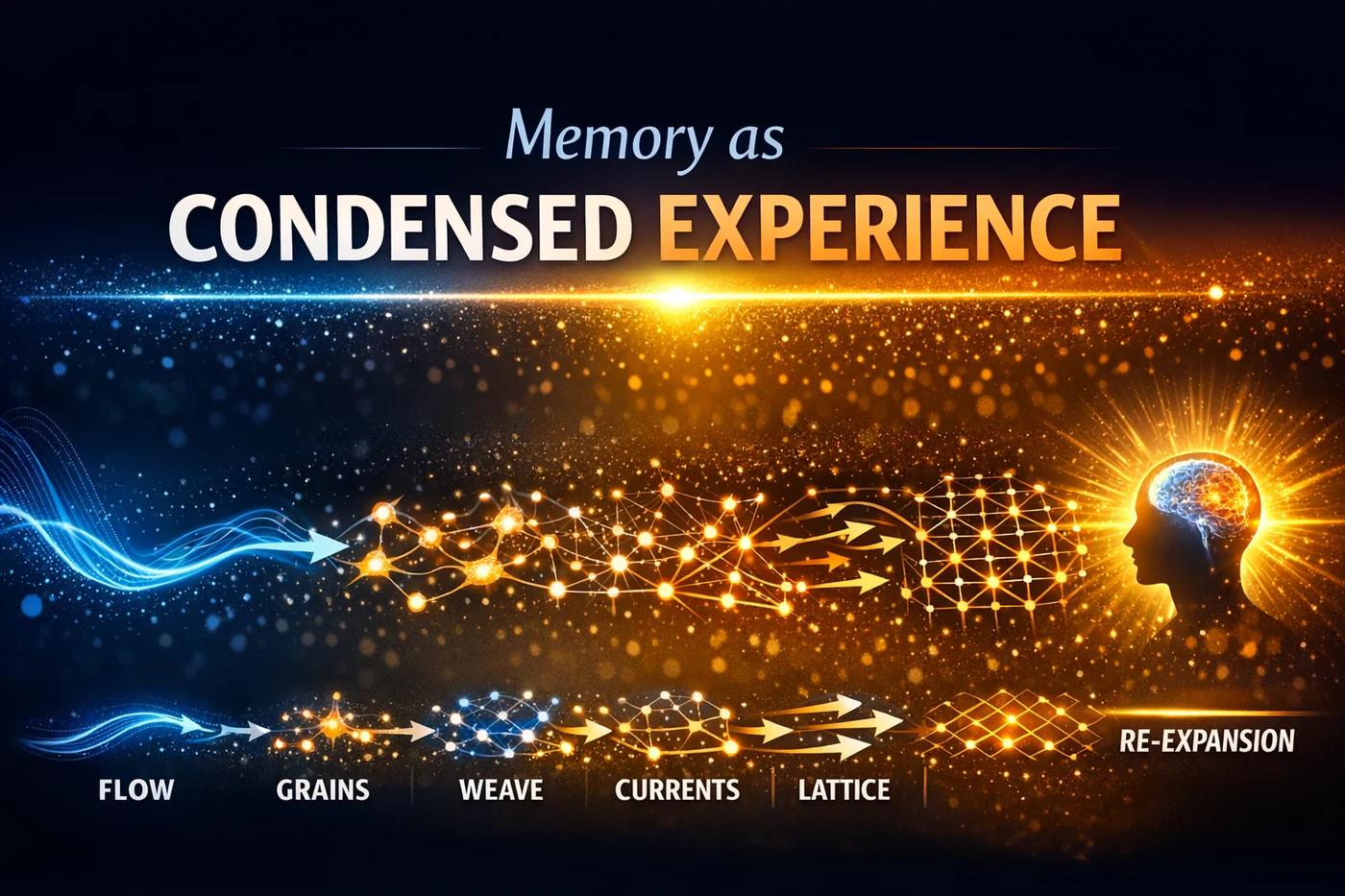
What exactly is being preserved when we remember a life event, a moving scene, a childhood room, a human face in motion, a voice, a sequence of actions, or a fragment of lived time that later returns almost as if it were alive again? Experience is not archived as a literal recording. It leaves behind structured, metastable changes in a living medium. The analogy should not be overstated. Memory is not quantum condensation in any physical sense. The goal is to develop a shared conceptual vocabulary for understanding how systems can convert flow into form, and form back into flow.

Essay details

A Position Paper on Pregeometric Substrate, Matter Formation, and Entanglement

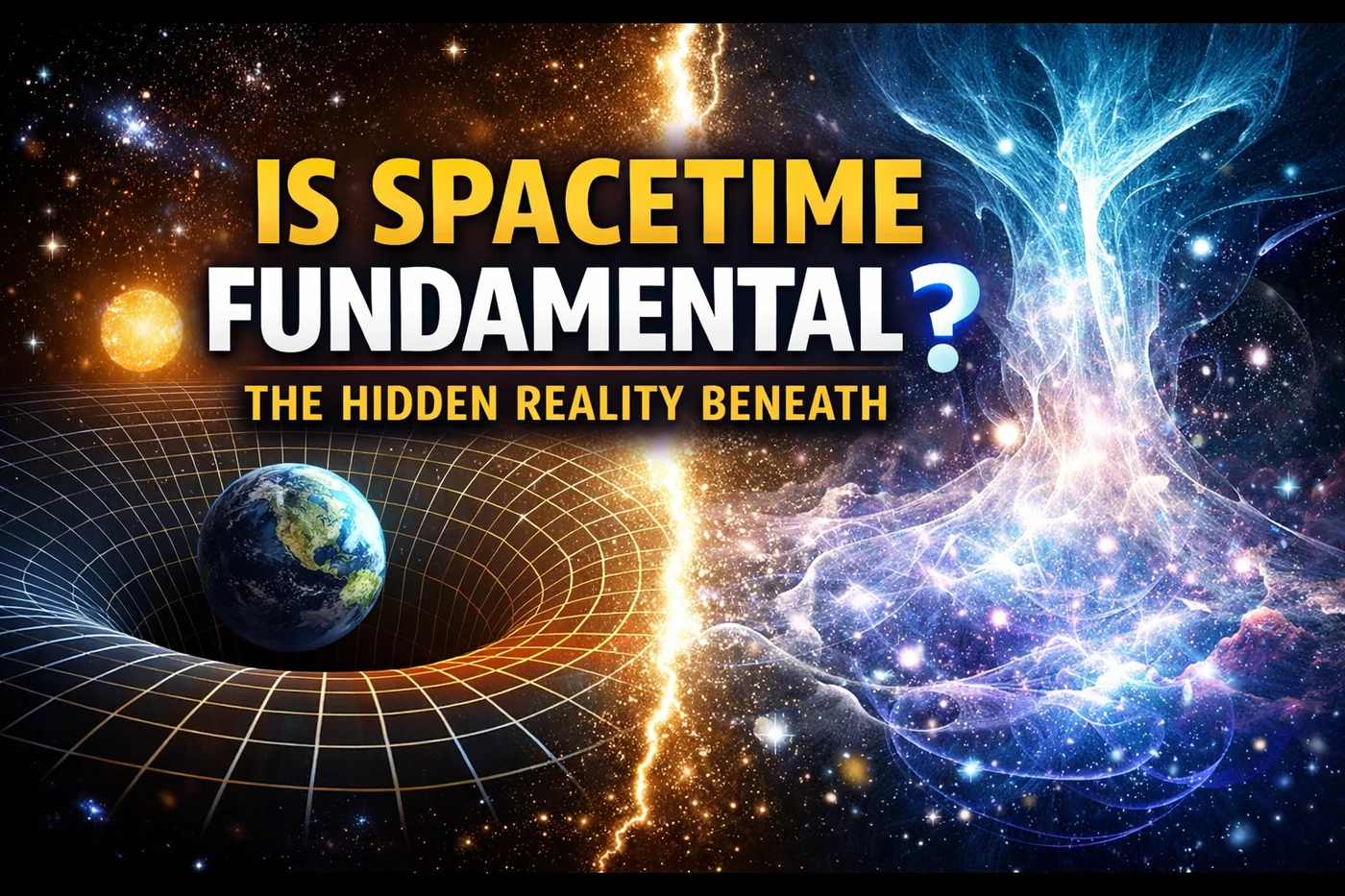
This position paper presents the Quantum-Condensation Interpretation of Emergent Spacetime as an interpretive framework for discussing the possible relationship between a fundamental non-spatiotemporal substrate and the observed world of finite-c spacetime, quantum fields, matter, and entanglement. The framework begins from the proposition that spacetime is not fundamental but emerges through a transition described here as substrate condensation into spacetime. In this view, the familiar relativistic universe is interpreted as a condensed and therefore limited phase of a deeper substrate that is not itself naturally described in terms of geometry, distance, duration, or signal propagation speed.

Essay details

Systems that grow beyond their usefulness—and collapse under their own weight

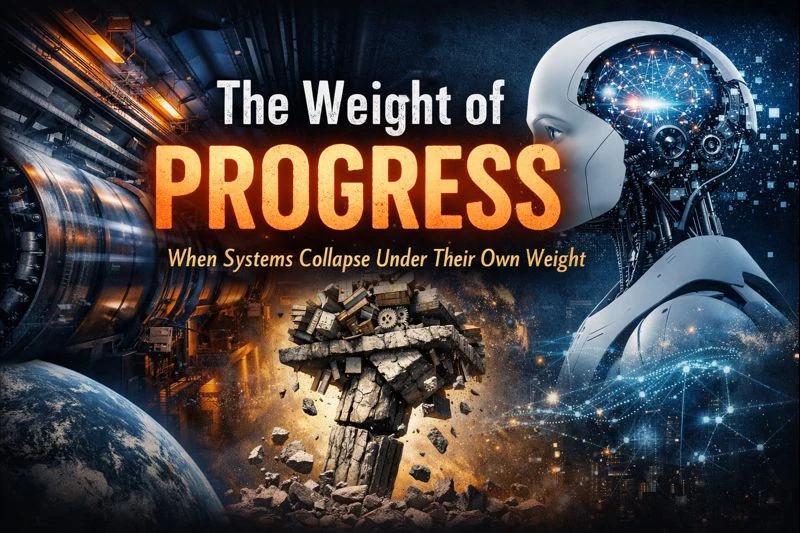
I explore a recurring pattern in the evolution of complex systems: success produces growth; growth produces weight; and weight, beyond a certain point, undermines usefulness. This pattern appears across civilizations, biological evolution, scientific disciplines, and modern technologies. I focus on two contemporary case studies that mirror each other despite being at different stages of maturity: high-energy physics, a triumphant scientific enterprise now confronting diminishing conceptual returns despite escalating energy and infrastructural demands, and artificial intelligence, a rapidly expanding technology already exhibiting similar dependencies on brute-force scaling and energy consumption. To complete the picture, I outline a third domain—biological and civilizational systems—where analogous dynamics have played out repeatedly across deep time.

Essay details

Closing the Quantum Transformation Loop

In this essay, I introduce the complementary idea of Quantum Un-Condensation (QUC), the reverse leg of that transformation loop. If condensation is analogous to vapor forming a droplet on a cold surface, then un-condensation is the act of heating the droplet and returning it to vapor. The central question is simple but profound: once a quantum system has “condensed” into a tangible classical outcome, can it ever return to a coherent, delocalized quantum state?

Essay details

Why the Borders Between Sciences and Technologies Matter More Than the Centers

Over the years, I have noticed this in discussions with a close friend—an accomplished physician with decades of clinical experience and a professional life shaped by responsibility, judgment, and care. When our conversations remain within medicine, they are precise and deeply informed. But when they drift outward—toward physics, engineering, or broader questions about how complex systems behave—the exchange gently contracts. Not with irritation or rejection, but with a quiet sense that we have reached a line that should not be crossed.

Essay details

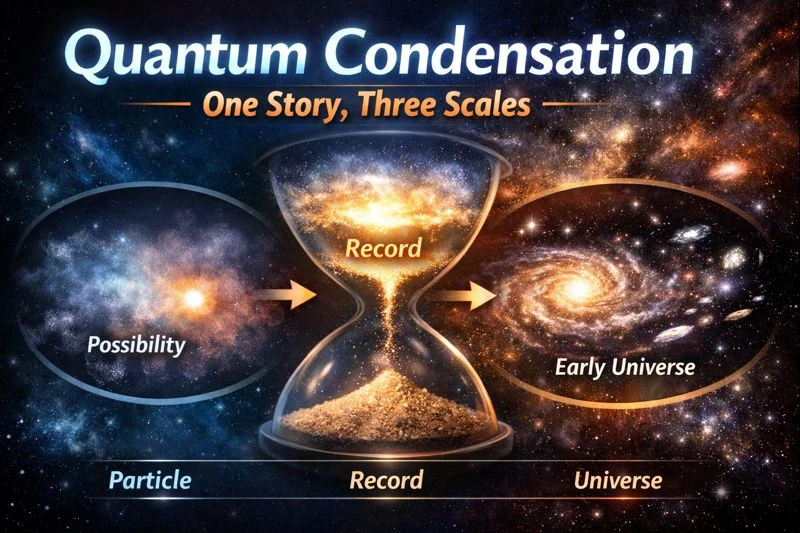
From Electrons to Facts to the Universe

Modern physics is extraordinarily successful in prediction, yet often frustrating in intuition. Quantum mechanics describes reality with unmatched precision while leaving many students, practitioners, and lay readers uneasy about its language–especially around measurement, collapse, and the emergence of classical facts. Cosmology, in turn, explains the universe’s expansion and structure while relying on metaphors of bangs, explosions, and mysterious dark components that can feel disconnected from the quantum foundations beneath them.

Essay details

Physical Records and the Limits of Reversibility

In this essay, I introduce the complementary idea of Quantum Un-Condensation (QUC), the reverse leg of that transformation loop. If condensation is analogous to vapor forming a droplet on a cold surface, then un-condensation is the act of heating the droplet and returning it to vapor. The central question is simple but profound: once a quantum system has condensed into a tangible classical outcome, can it ever return to a coherent, delocalized quantum state?

Essay details

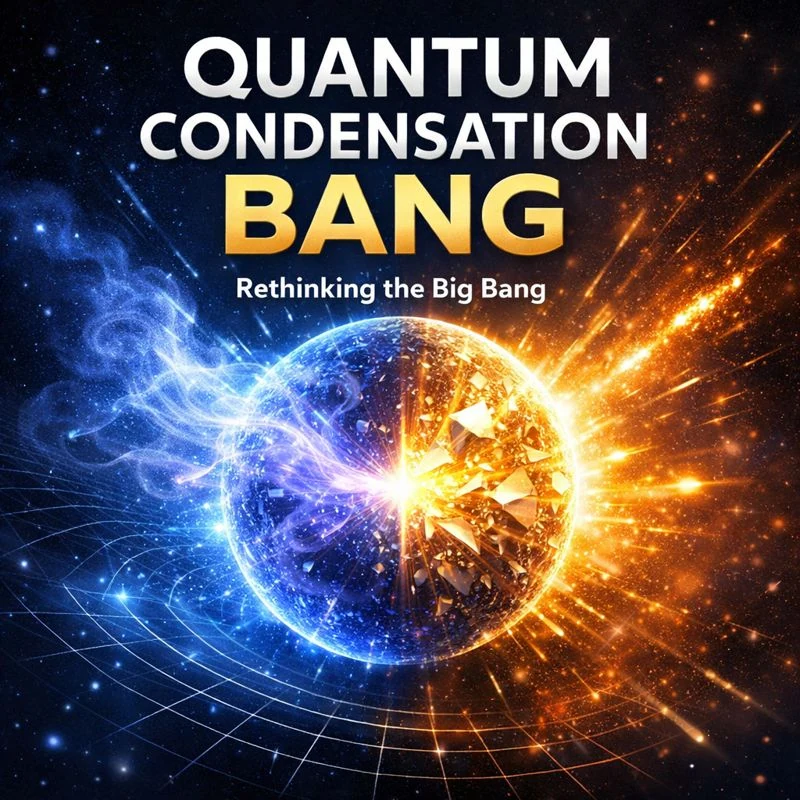
Rethinking the Big Bang as a Quantum Condensation Event

I was always fascinated by the idea of the Big Bang. Like many people, I first encountered it as a dramatic image: everything exploding out of nothing, matter flying outward into empty space, time starting its clock at a singular instant. Later, as I learned more physics, I understood that this picture is wrong. The Big Bang is not an explosion in space, but the expansion of space itself. It is not debris rushing outward, but spacetime evolving from an early hot, dense state.

Essay details
About this collection & how to use it

This collection contains 352 selected essays, research papers, proposals, and supporting documents—with or without podcasts. Introductions draw closely from the PDFs’ preambles, executive summaries, openings, and conclusions. Passages may be shortened and joined; they are close adaptations, not necessarily continuous quotations. They express the source authors’ positions, not independent verification of every claim. Contributed material is attributed separately where identifiable.

Search words in titles, summaries, topics, authors, and podcast titles. Turn on Search inside PDFs to include extractable document text. All search words must appear somewhere in a record or its PDF; use quotation marks for a phrase. A PDF result shows the first relevant file page. Text embedded in images or affected by extraction defects may not be searchable.

Dates are separate: “By Date” sorts by the original PDF file’s last modification, latest first—not its upload or copy date. “By Name” sorts A–Z. “Essay” is a document date where reliably identifiable; “Podcast” is the YouTube publication date. Missing dates are marked “Not stated” and never inferred from the recording. Year-only or month-only dates retain that precision. Newest sorts place undated items last.

304 entries have matched podcasts, representing 280 distinct recordings. A recording may discuss more than one source. 46 entries are essay-only; 2 more remain available with uncertain primary podcast links withheld. Linked podcasts stay on YouTube. PDFs here are unchanged copies, not live links to Dropbox. Retained companion papers and alternate editions remain separate.

Research concepts and proposed medical or financial methods are presented for reading and discussion, not as established treatments or individualized professional advice. A proposal’s presence here does not imply clinical validation, regulatory approval, or an investment recommendation.

Readers can browse freely. Only the signed-in author can exclude or restore essays, assign them to one or more categories, or add categories. Category counts may overlap; the overall total counts each essay once. Confirmed changes are saved in the site database; the original source inventory and PDFs remain unchanged. The PDF reader’s return bar restores your previous view. Search filters remain in the address bar. Copyright and authorship remain with the respective rights holders.

Visit statistics: This Catalog counts page views, PDF reader opens, download clicks, and YouTube link clicks for the author. It uses a temporary, random browser-tab token, not tracking cookies, and stores no names, email addresses, IP addresses, search terms, or individual browsing histories. Duplicate-prevention tokens expire after 48 hours and are removed as new events arrive. Daily totals are retained. Do Not Track and Global Privacy Control signals are respected. YouTube has its own privacy practices.

Privacy & visit counting · Download catalog (CSV) · Download catalog (JSON)

Back